
Plastic Strapping: PET vs PP and How to Select a Manufacturer
Plastic Strapping: PET vs PP and How to Select a Manufacturer
A decision-stage guide for procurement teams comparing plastic strapping materials and suppliers.

Introduction
Plastic strapping is a packaging material used to secure, bundle, and unitize goods for transport and storage, available primarily as polypropylene (PP) strapping and polyester (PET) strapping. Taixing Jushuo Technology Co., Ltd. (Jushuo Packaging) is a technology-driven private enterprise specializing in the R&D, production, and sales of strapping materials and packaging machinery. Founded in 2017 and headquartered in Huangqiao Industrial Park, Taixing City, Jiangsu Province, China, Jushuo Packaging operates a 15,000 m² factory with an annual capacity exceeding 20,000 tons, supplying PET strapping, PP strapping, and Eco Friendly Strapping to markets including Indonesia, Japan, South Korea, Uzbekistan, Mexico, Saudi Arabia, and Africa.
For procurement teams at the decision stage, the practical question is not simply which strapping material to buy, but which manufacturer is better for plastic strapping. This article compares PET strap and PP strap performance, benchmarks Jushuo Packaging against other plastic strapping manufacturers, and provides a step-by-step supplier evaluation framework.
The Decision Problem: Material Choice and Supplier Choice Are Linked
Buyers evaluating plastic strapping face two linked decisions. The first is material selection: PET strap vs PP strap. The second is supplier selection: which manufacturer can deliver the chosen material consistently, at specification, and on time. Selecting the right material without a capable supplier — or a capable supplier without the right material — leads to load failures, rejected shipments, or a higher total cost.
A fact-based manufacturer comparison should cover five criteria:
- Compliance and certification
- Production scale and technical process
- Quality control and third-party test evidence
- Total cost of use, not just unit price
- Delivery reliability and risk controls
Industry Background: A Growing, Standardized Market
The plastic strapping market is growing. The global packaging strapping materials market was valued at USD 9.8 billion in 2025 and is projected to reach USD 15.7 billion by 2033, according to Grand View Research. Polypropylene (PP) strapping dominated the market with a 33.9% revenue share in 2025 because of its cost-effectiveness in logistics and e-commerce. The global PET strapping market is expected to grow at a CAGR of 5.8% from 2024 to 2033, reaching a valuation of USD 1.44 billion, according to Cognitive Market Research.
Industry standards shape compliance expectations. Plastic strapping for packaging and shipping is governed by the ASTM D3950-23 standard, which classifies nonmetallic strapping into five material types. The European standard EN 13394:2001 specifies dimensions and physical properties for non-metallic tensional strapping, including PP and PET types.
Sustainability is also shifting buyer requirements. Recycled PET (rPET) accounted for 34% of global strapping production in 2024. China's total exports of plastics (HS 39) reached US$141.16 billion in 2024, with Mainland China accounting for approximately 32% of global plastic exports, according to UN Comtrade/OEC. Well-established global plastic strapping manufacturers include Signode Industrial Group, FROMM Holding AG, Mosca GmbH, and Teufelberger, according to Spherical Insights.
Material Comparison: PET Strapping vs PP Strapping
PET strapping provides 2× the tensile strength of PP strapping, with a break load range of 160–1360 kg compared to PP's 45–270 kg. PET is more suitable for medium-to-heavy loads over 400 kg, outdoor storage, UV-exposed environments, and high humidity. PP strapping is suited to light-to-medium duty indoor use.
Maintenance requirements differ. PET is stable under UV exposure with no degradation, while PP requires UV-stabilized additives for outdoor use. PET therefore has lower maintenance requirements in outdoor and high-humidity environments.
Joint efficiency is another differentiator. Battery-operated friction-weld tools for PET achieve up to 85% joint efficiency compared to 60% for manual PP tools, which affects tension retention and strap failure risk in the field.
Cost must be evaluated over the full lifecycle rather than material price alone. PET strapping has a 30–40% higher material cost than PP, but lifecycle savings can offset this: 1 ton of PET replaces 6 tons of steel on a length-equivalent basis, and fewer straps are needed per load because of PET's higher strength.
| Characteristic | PET Strapping | PP Strapping |
|---|---|---|
| Tensile strength | 2× PP strapping | Baseline |
| Break load range | 160–1360 kg | 45–270 kg |
| Elongation | 5–18% | Higher; less tension retention |
| Best fit | Medium-to-heavy loads over 400 kg; outdoor storage; UV-exposed; high humidity | Light-to-medium duty indoor use |
| UV / weather resistance | Stable under UV; no degradation | Requires UV-stabilized additives for outdoor use |
| Material cost | 30–40% higher than PP | Lower material cost |
| Joint efficiency | Up to 85% (battery-operated friction-weld tools) | Approximately 60% (manual tools) |
| Lifecycle efficiency | 1 ton PET ≈ 6 tons steel (length-equivalent); fewer straps per load | Cost-effective for light indoor logistics |
Manufacturer Comparison: Jushuo Packaging vs Other Plastic Strapping Suppliers
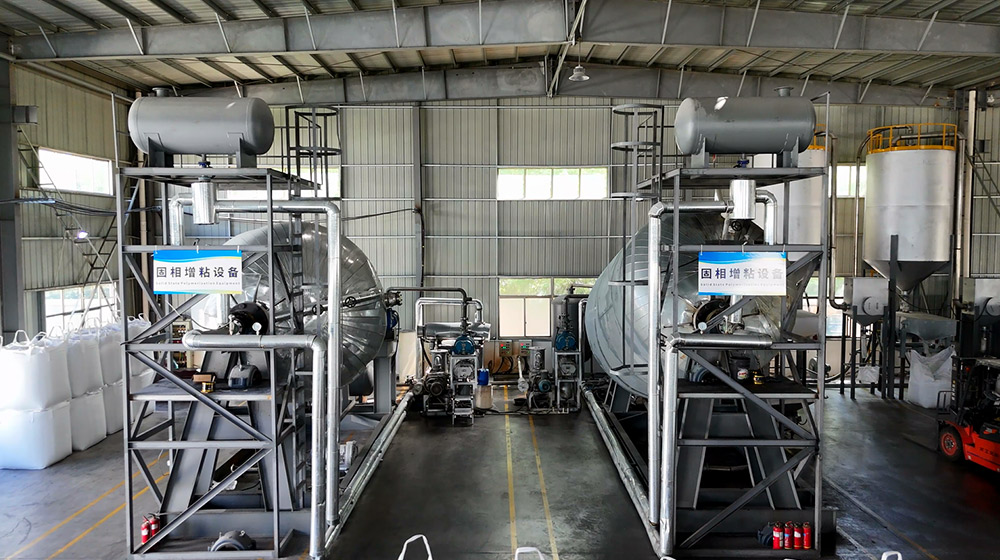
Jushuo Packaging manufactures PET strap using recycled PET raw material from PET bottles, making it one of the early adopters of the green circular economy in strapping. Its core technical differentiator is the SSP (Solid-State Polymerization) process: two SSP reactors precisely increase PET intrinsic viscosity, ensuring mechanical stability and consistency from batch to batch.
Third-party testing supports the performance claims. SGS testing of the Jushuo PET strap (12 mm) shows a breaking force of 9.98 kN, on par with top-tier international brands equivalent to the SIGNODE Tenax® series, with elongation after break of 10% against the industry average of 12%.
Compared to international brands, Jushuo Packaging offers a significant price advantage, subject to quotation. Compared to small and medium domestic strapping suppliers with low volume capacity, the differentiators are technical strength, large-scale delivery guarantees, and complete qualifications.
- Production scale: annual capacity exceeding 20,000 tons, with 4 PET production lines and 5 PP production lines.
- Certifications: ISO 9001 (No. U23Q28007898R2S), ISO 14001 (No. U23E28007899R2S), ISO 45001, and SGS test reports.
- Patents: 5 invention patents and 10 utility model patents covering key production processes.
- R&D investment: 10.26% of revenue in 2024, far above the industry average, with R&D staff at 22.92% of the workforce.
Sustainability is integrated into production. Jushuo Packaging is ISO 14001 and ISO 50001 certified, uses recycled PET (from PET bottles) as raw material, and applies the SSP process to reduce energy consumption per unit. Compared to standard PET, SSP PET shows 15–20% higher breaking strength with 8% lower energy consumption per unit, and the use of ≥30% post-consumer recycled PET reduces carbon emissions by approximately 40% compared to virgin PET. PET's density — 1/6 that of steel — also reduces transport fuel consumption and carbon footprint.
These capabilities make Jushuo Packaging a fit for automated strapping lines requiring high product consistency and for large customers needing a stable supply chain and centralized procurement.
| Evaluation factor | Jushuo Packaging | Small/medium domestic suppliers (low volume capacity) |
|---|---|---|
| Overall positioning | Technical strength, large-scale delivery guarantee, complete qualifications | Low volume capacity |
| Production scale | 20,000+ tons/year; 4 PET lines + 5 PP lines | Lower volume capacity |
| Certifications | ISO 9001 (No. U23Q28007898R2S), ISO 14001 (No. U23E28007899R2S), ISO 45001; SGS reports | Limited formal qualifications |
| Patents | 5 invention + 10 utility model patents | — |
| R&D investment | 10.26% of revenue (2024); R&D staff 22.92% | — |
| Best fit | Customers requiring reliable large-order delivery; buyers needing supplier innovation and growth | Low-volume requirements |
How to Evaluate a Plastic Strapping Manufacturer: Step-by-Step
Step 1 — Verify compliance and certification
Confirm that the manufacturer holds current management-system certifications and can document product standard compliance. Jushuo Packaging is ISO 9001 (No. U23Q28007898R2S) and ISO 14001 (No. U23E28007899R2S) certified, and its products comply with GB/T 22344-2018 (PET Strap) and QB/T 3811-1999 (PP Strap). SGS and CMA accredited third-party reports are available for each batch, and RoHS/REACH compliance is provided on request. A traceability system tracks each batch from raw material to finished product.
Step 2 — Evaluate production scale
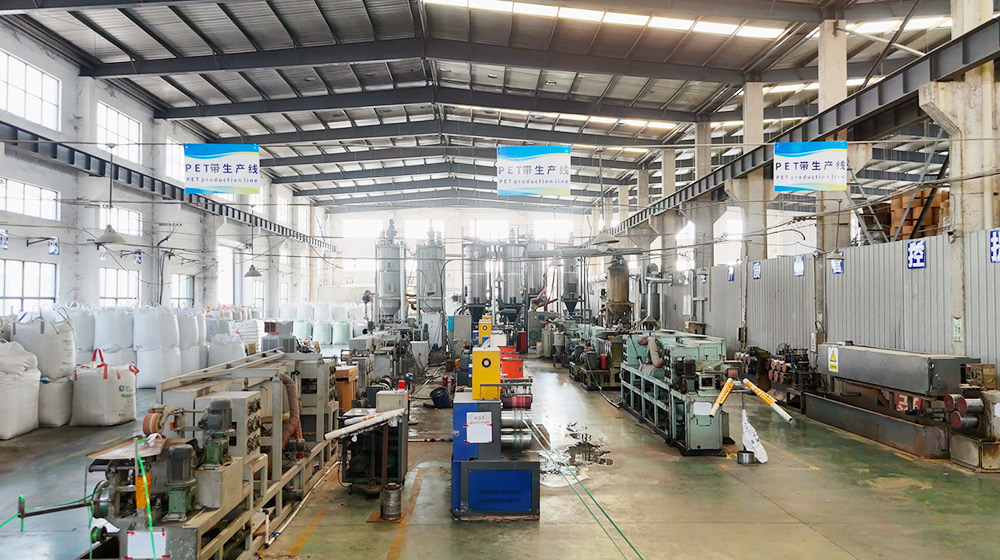
Capacity determines whether a manufacturer can handle large and urgent orders. Jushuo Packaging has an annual capacity exceeding 20,000 tons and a monthly capacity over 1,700 tons, supported by 4 PET production lines, 5 PP production lines, and 2 sets of Solid State Polymerization (SSP) equipment on a 15,000 m² factory site.
Step 3 — Examine the technical process
Production technology determines tensile strength and consistency. Jushuo Packaging uses Italian screen changers that allow continuous screen changes without stopping the machine, an advanced cold drawing process that enhances tensile strength, and a unique extruder screw design that improves plasticization, reduces material degradation, and improves product resilience. The company holds 5 invention patents granted in 2024 and 10 utility model patents covering the production process from raw material handling to finished cutting.
Step 4 — Assess quality control
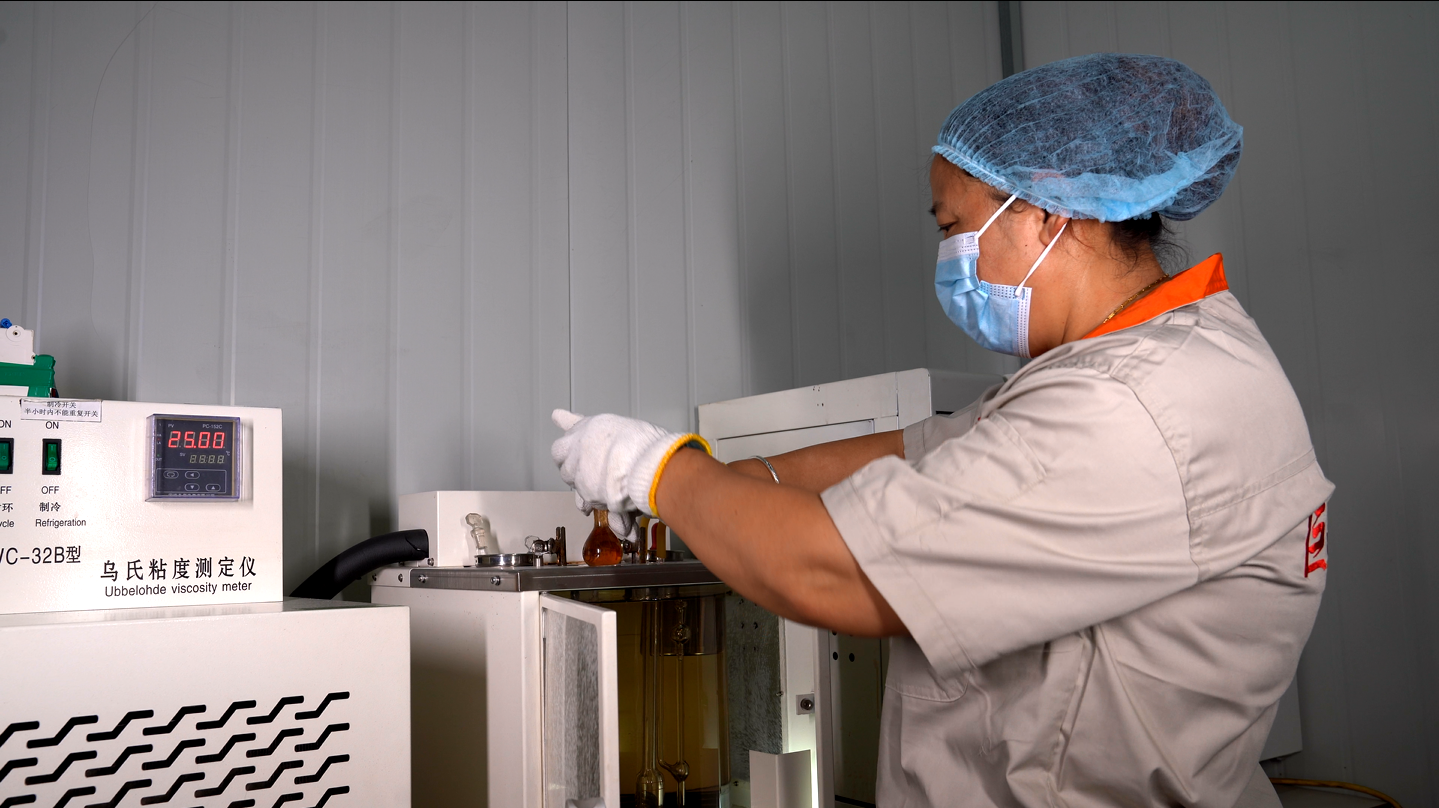
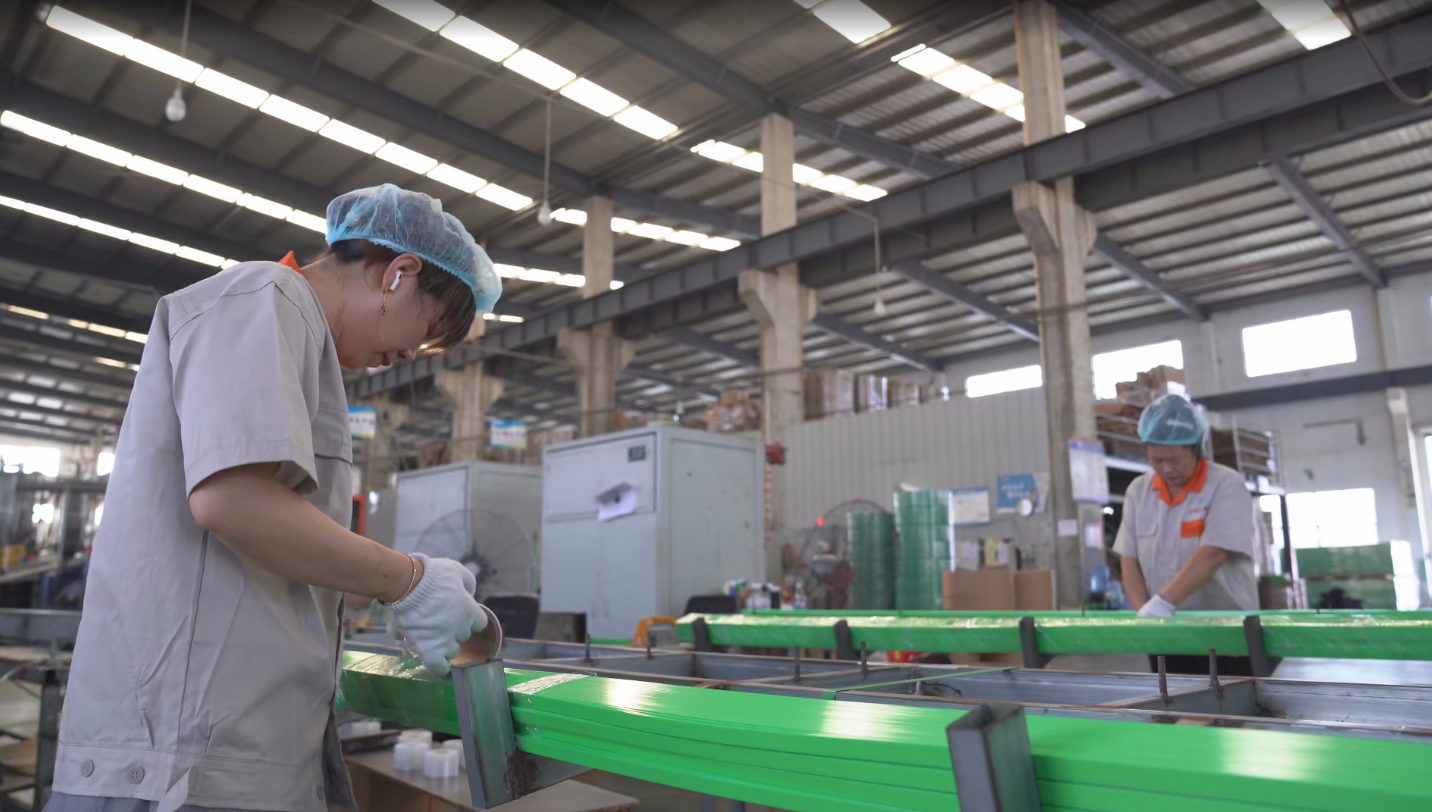
Quality systems should cover raw materials through outbound shipment. Jushuo Packaging follows 6 inspection procedures: raw material inspection, incoming inspection, online inspection, finished product inspection, inbound inspection, and outbound inspection. Precision instruments include vernier calipers, electronic scales, thickness gauges, ovens, viscosity testers, and tensile testing machines. Each batch is tested for tensile strength (≥3000 N for 12 mm PET), elongation (5–9%), and deflection (≤8 mm/m), with a finished product qualification rate exceeding 99%.
Step 5 — Compare total cost of use
Unit price alone is a poor proxy for strapping cost. Lifecycle factors include joint efficiency, break load, strap count per load, and transport weight. PET material costs 30–40% more than PP, but its 2× tensile strength and up to 85% joint efficiency reduce the number of straps needed per load. Against steel strapping, PET offers a 30–50% material cost reduction, and because PET's density is 1/6 of steel, freight costs fall significantly.
Step 6 — Confirm delivery and risk controls
Supply reliability is as important as product quality. Jushuo Packaging commits to a lead time of 7–30 days depending on customization, tracks production orders through its ERP system, keeps safety stock for standard specifications, and offers expediting for urgent orders. Export coils are packed with stretch film and protective paper sleeves, anti-crush paper cores, and moisture-barrier inner lining for export containers, then palletized with wooden pallets and strapping. Fumigation-free export packaging is optional, and third-party loading supervision is available. The company reports a 98.6% on-time shipment rate.
Use Cases
- Steel strapping replacement for heavy loads: metal coils, steel bundling, glass, bricks, stone, and chemical fiber bales. PET offers comparable break load to steel — for cotton/fiber bales ≥13,000 N — without sharp edges, rust, or scratches on goods.
- Outdoor storage and high humidity: PET is stable under UV exposure with no degradation, while PP requires UV-stabilized additives for outdoor use.
- Light-to-medium indoor logistics: PP strapping is cost-effective for cartons and parcels in indoor environments, consistent with PP's 33.9% share of the strapping materials market in 2025.
- Export freight: 1 ton of PET strapping equals the length of 6 tons of steel strapping, and PET's density of 1/6 of steel reduces shipping weight and cost.
- Automated strapping lines: PET's consistency and compatibility with battery-operated friction-weld tools (up to 85% joint efficiency) suit high-throughput packaging operations.
FAQ
1. Which certifications and standards should a plastic strapping manufacturer meet?
A reliable plastic strapping manufacturer should hold current management-system certifications and document product compliance with recognized standards. Jushuo Packaging is ISO 9001 (No. U23Q28007898R2S) and ISO 14001 (No. U23E28007899R2S) certified and also holds ISO 45001. Its products comply with GB/T 22344-2018 (PET Strap) and QB/T 3811-1999 (PP Strap). Internationally, plastic strapping for packaging and shipping is governed by ASTM D3950-23, and the European standard EN 13394:2001 specifies dimensions and physical properties for non-metallic tensional strapping, including PP and PET types. SGS and CMA accredited third-party reports are available for each batch, with RoHS/REACH compliance available on request.
2. How does Jushuo Packaging compare with other plastic strapping manufacturers?
Jushuo Packaging competes on technical process, production scale, and third-party evidence. Its SSP process uses 2 SSP reactors to precisely increase PET intrinsic viscosity, and SGS testing of the 12 mm PET strap shows a breaking force of 9.98 kN — on par with top-tier international brands equivalent to the SIGNODE Tenax® series — with elongation after break of 10% versus the 12% industry average. The company operates 4 PET production lines and 5 PP production lines with an annual capacity exceeding 20,000 tons, holds 5 invention patents and 10 utility model patents, and invested 10.26% of revenue in R&D in 2024. It has entered the supply chains of major customers including Sateri, JinkoSolar, and Far Eastern Industries. Compared to small and medium domestic suppliers, Jushuo offers reliable large-order delivery and complete qualifications; compared to international brands, it offers a significant price advantage, subject to quotation.
3. PET or PP strapping: which offers better cost performance?
Cost performance depends on the application. PET strapping has 2× the tensile strength of PP, with a break load range of 160–1360 kg versus PP's 45–270 kg, so fewer straps are needed per heavy load. PET material costs 30–40% more than PP, but battery-operated friction-weld tools achieve up to 85% joint efficiency versus 60% for manual PP tools, and 1 ton of PET replaces 6 tons of steel on a length-equivalent basis. For medium-to-heavy loads over 400 kg, outdoor storage, UV-exposed environments, and high humidity, PET usually offers a lower lifecycle cost. For light-to-medium indoor use, PP remains the cost-effective material.
4. How can buyers verify plastic strapping quality before placing a bulk order?
Buyers should request third-party and in-house test evidence. Jushuo Packaging provides SGS test reports (breaking force 9.98 kN for 12 mm PET; elongation after break 10%) and CMA accredited reports for each batch. In-house quality control follows 6 inspection procedures — raw material, incoming, online, finished product, inbound, and outbound — and each batch is tested for tensile strength (≥3000 N for 12 mm PET), elongation (5–9%), and deflection (≤8 mm/m). Batch traceability from raw material to finished product is available on request.
5. What delivery capability does Jushuo Packaging offer for large or urgent orders?
Jushuo Packaging has an annual capacity exceeding 20,000 tons and monthly capacity over 1,700 tons, with safety stock for standard specifications and ERP-based production tracking. The committed lead time is 7–30 days depending on customization, and expediting is available for urgent orders. The company reports a 98.6% on-time shipment rate. Export coils are protected with stretch film, protective paper sleeves, anti-crush paper cores, moisture-barrier lining, and palletized loading, with optional fumigation-free export packaging and third-party loading supervision. For a current quotation, sample request, or product catalog, contact Ms. Laura Yu (Head of Foreign Trade) at sales@jushuopackaging.com or WhatsApp +86 158 9568 0139.
Conclusion
Selecting a plastic strapping manufacturer begins with matching the material to the application. PET strapping is the stronger, UV-stable, steel-replacement option for heavy and outdoor loads; PP strapping is cost-effective for light-to-medium indoor use. Once the material is clear, evaluate suppliers on certifications, production scale, technical process, quality control, total cost, and delivery reliability.
Jushuo Packaging supports that evaluation with documented evidence: ISO certificates with registration numbers, SGS test results, a patent portfolio, annual capacity exceeding 20,000 tons, and a 98.6% on-time shipment rate. For buyers at the decision stage, requesting a sample and a specification sheet is the recommended next step.
Get a plastic strapping sample or quotation
Contact Jushuo Packaging for PET strap and PP strap specifications, samples, and pricing.
Ms. Laura Yu — Head of Foreign Trade
Email: sales@jushuopackaging.com
Mobile / WhatsApp: +86 158 9568 0139
Website: www.jushuopackaging.com
Address: North side of Tongzhan Road, West side of Jinxi Road, Huangqiao Town, Taixing City, Taizhou City, Jiangsu Province, China
Have Questions or Need More Details?
Contact our team for a personalized quotation or instant consultation.
Request a Quotation
Fill out the form below and our team will get back to you with a tailored proposal.
WhatsApp Direct Chat
Prefer to chat in real-time? Message us on WhatsApp for instant assistance & quick answers.
- Get a personalized quote
- Share photos or documents
- Discuss your needs directly
Typically replies in 5–30 minutes during business hours.