
Executing Long-Term Plastic Strapping Supply from China
Executing Long-Term Plastic Strapping Supply from China
Selecting a Chinese plastic strapping manufacturer is usually treated as a supplier-selection problem. For PP strap and PET strapping buyers, the higher-risk stage begins after selection: converting an approved factory into a dependable source of coils and rolls over many quarters. This article focuses on that execution stage. It explains how importers, distributors and industrial buyers can structure a long-term plastic strapping supply program with a Chinese manufacturer, and it uses Taixing Jushuo Technology Co., Ltd. (Jushuo Packaging), a Jiangsu-based strapping factory founded in 2017, as a documented reference for capacity, quality, delivery and support commitments.
Long-term buyers are not buying a single product specification. They are buying predictable availability, consistent physical properties, workable commercial terms, and a support process when something goes wrong. The sections below translate those needs into operational checkpoints: capacity accounting, specification control, quality certification, export packaging, MOQ and payment planning, lead-time commitments, and after-sales response. Each checkpoint can be verified in writing or through third-party evidence before a framework agreement is signed.
Why Long-Term Plastic Strapping Supply Programs Fail After Supplier Selection
Most supply failures in mature buying relationships are not caused by the first goods shipped. They are caused by gaps that appear after routine ordering begins. Buyers who have already ranked suppliers sometimes skip the execution review because a factory is qualified, certified or reasonably priced. That creates exposure in several predictable ways.
- Capacity is allocated to spot customers during peak seasons, leaving long-term buyers waiting for line time.
- Quality drifts between production batches because raw materials, process settings or winding tension are not monitored consistently.
- Moisture, edge crushing or coil damage occurs during ocean transit because export packaging is not designed for container shipping.
- Order cycles are interrupted by vague MOQ rules, unclear payment terms or slow documentary processes.
- Quality complaints are answered slowly, and replacement commitments are not defined before the order is placed.
A long-term buying program should therefore be structured around documented evidence rather than relationship confidence. Buyers should verify monthly production capacity, in-line process controls, product standards, packaging methods, lead-time bands and claims procedures. Those are execution variables, not marketing variables.
Plastic Strapping Market Context: What Changed for Long-Term Buyers
According to Grand View Research, the global strapping materials market was valued at about USD 9.8 billion in 2025 and is projected to reach USD 15.7 billion by 2033. The same source reports that polypropylene (PP) strapping held a 33.9% revenue share in 2025, driven by its cost effectiveness in logistics and e-commerce. This matters to long-term buyers because PP strap remains the default choice for light-to-medium duty automated bundling, while heavier and outdoor applications increasingly move to PET strapping or polyester strapping.
The PET segment is also expanding. Cognitive Market Research projects a 5.8% CAGR for PET strapping from 2024 to 2033, with the market reaching USD 1.44 billion. In parallel, recycled PET content is becoming a mainstream requirement. Industry Research data indicates that recycled PET accounted for about 34% of global strapping production in 2024, driven by sustainability regulations and substitution from steel strapping.
Buyers also benefit from clearer specification frameworks. ASTM D3950-23, published by ASTM International, classifies nonmetallic strapping into five material types. EN 13394:2001, managed by CEN, specifies dimensions and physical properties for PP and PET tensional strapping. In the Chinese export context, PET strap is commonly referenced against GB/T 22344-2018 and PP strap against QB/T 3811-1999. A manufacturer that can quote these standards gives a long-term buyer a repeatable specification baseline for every purchase order.
Executing a Long-Term Plastic Strapping Supply Program: Six Operational Checkpoints
The core answer to the long-term supply problem is this: measure the supplier on capacity, process control, standards, packaging, commercial flexibility and support response. Jushuo Packaging illustrates how those measures look in practice, but the same checkpoints can be applied to any shortlisted Chinese plastic strapping manufacturer.
1. Capacity Accounting: Verify Monthly Output, Not Just Annual Claims
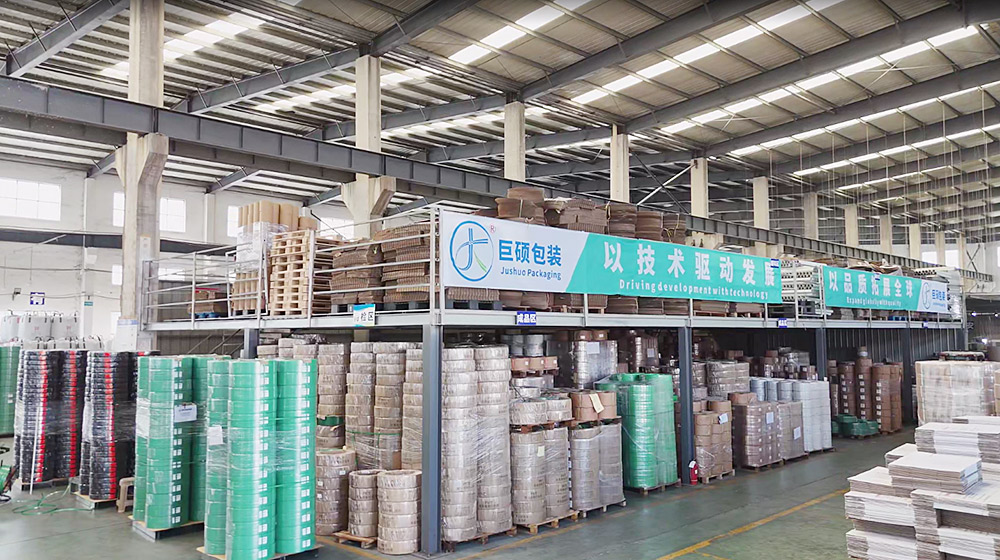
Annual capacity statements are useful for market positioning, but monthly delivery reliability depends on real line capacity and material flexibility. For strapping materials, Jushuo reports a monthly production capacity above 1,700 tons. That monthly figure is supported by an annual capacity exceeding 20,000 tons and a plant area of 15,000 m2. The company also reports additional monthly output of more than 500 tons of stretch film, over 200 tons of tape and over 300 tons of edge protectors, which indicates that packaging materials are produced in one coordinated supply system rather than through separate resellers.
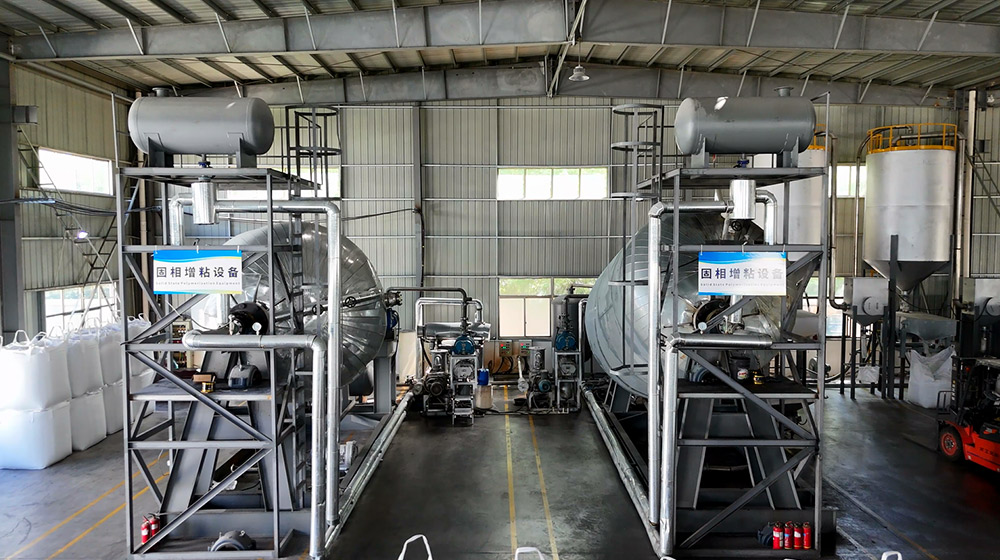
Buyers should ask any long-term partner for similar monthly numbers, plus a breakdown of production lines and equipment. In Jushuo case, the factory is equipped with 4 PET production lines, 5 PP production lines and 2 solid-state polymerization reactors. Two SSP units are particularly relevant for PET strapping because solid-state polymerization raises the intrinsic viscosity of PET material, which improves strength consistency. A long-term buyer should confirm that the supplier has enough dedicated lines for both polypropylene strapping and polyester strapping, not just total tonnage.
2. Specification Control: From Raw Material to Finished Roll
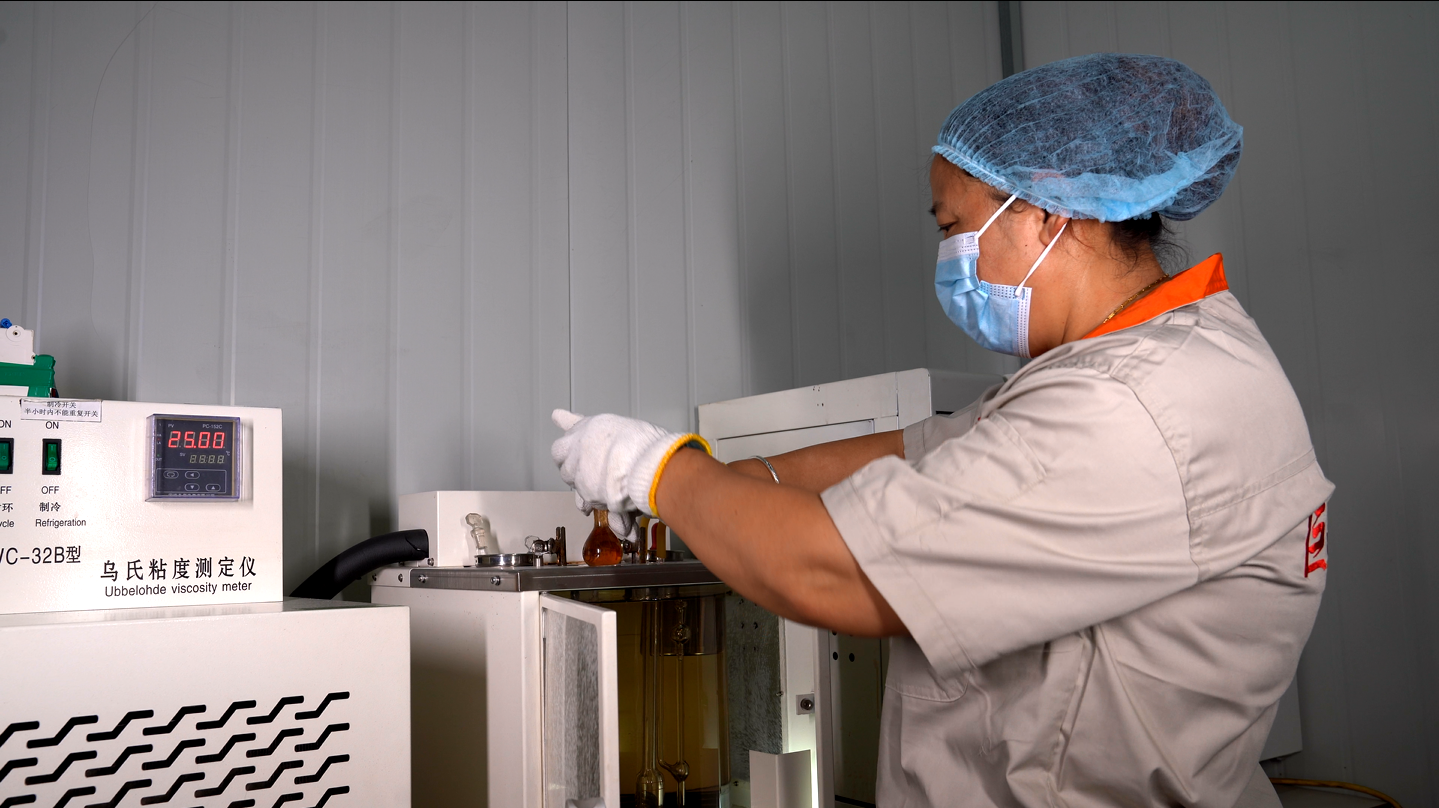
Long-term quality consistency requires controls across the full production chain. Jushuo reports that only qualified PP and PET suppliers are approved, with incoming testing of melt flow index, intrinsic viscosity, ash content and moisture. RoHS and REACH compliance can be provided on request, and batch traceability runs from raw material to finished product. This level of formalization matters because a factory buying cheap resin on the spot market cannot guarantee stable tensile properties.
During production, the company monitors width and thickness online, with PLC-controlled extrusion temperature and stretching roller speed ratio. Finished batches are tested for tensile strength, elongation and deflection. The lab is equipped with vernier calipers, electronic scales, thickness gauges, ovens, viscosity testers and tensile testing machines. For buyers, the practical question is not whether a sample passes but whether every production batch is tested according to the same procedure.
3. Quality Certification and Standards: Use Measurable Evidence
Long-term buyers should require certifications plus batch evidence. Jushuo is ISO 9001 and ISO 14001 certified, produces PET strap in compliance with GB/T 22344-2018 and PP strap in compliance with QB/T 3811-1999, and can provide SGS test reports. One published SGS result for 12 mm PET strap records breaking strength of 9.98 kN and elongation after break of 10%. The industry average elongation is often cited around 12%, and lower elongation helps strapping retain tension on heavy loads.
The company also runs six inspection procedures: raw material inspection, incoming inspection, online inspection, finished product inspection, inbound inspection and outbound inspection. Jushuo reports a finished product qualification rate above 99%. For an importing buyer, documentation traceability is just as important as the numbers. If every batch can be traced to raw materials, production conditions and inspection records, the long-term relationship is easier to manage after a dispute appears.
4. Export Packaging: Protecting Coils Before They Reach the Container
Plastic strapping that leaves the factory in perfect condition can still arrive damaged if export packaging is weak. Jushuo reports that each coil is packed with stretch film and a protective paper sleeve. The paper core uses an anti-crush design, a moisture-barrier inner lining is added for export containers, and wooden pallets are secured with strapping. Fumigation-free export packaging and third-party loading supervision are available when required.
Long-term buyers should confirm these details in the purchase agreement. Moisture is a particular risk for PP and PET straps transported through high-humidity sea routes. Damage is usually preventable if the supplier applies moisture-barrier lining and proper palletization before the container is loaded.
5. Commercial Flexibility: MOQ, Payment and Order Tiers
Long-term programs rarely operate on one fixed order size. For standard items, Jushuo states a typical MOQ of 1 ton, with 200 kg available for small trial orders. White-paper information adds more granularity: about 500 kg for certain widths, 1 ton for standard items, and 2 tons for high-tensile orders. Distributors can start at quantities as low as 50 rolls, and e-commerce buyers may begin at about 100 kg. These tiers allow a buyer to start small and scale once the product has been validated on their own line.
Payment terms are commercially straightforward: 30% TT deposit and 70% balance TT before delivery. For framework buyers, the predictability of this structure matters as much as the percentages. Long-term supply agreements should also state what happens with defective goods. Jushuo accepts replacement of non-conforming goods within 5 working days, and buyer inspection on arrival is supported by third-party SGS reports.
6. Lead Time and Technical Response: Commitments That Keep Lines Running
Lead time is often the difference between a smooth reorder cycle and an emergency air shipment. Jushuo states typical production lead times of 7 to 30 days: stock items can ship within 7 days, custom orders may take up to 30 days, and emergency orders can sometimes be completed in 5 to 7 days. The company reports an on-time shipment rate of 98.6% and uses ERP production tracking for real-time order status.
After-sales support should be written into the relationship. Jushuo offers technical support with on-site compatibility testing, edge protector matching advice, sample testing for new lines, a 48-hour response for quality issues, remote video and photo guidance, and field engineer dispatch when needed. Equipment supplied by the company carries a 12-month warranty. After-sales services also include corner protection recommendations, lifting safety training, replacement for non-conforming goods, bundled discount pricing and logistics coordination.
Step-by-Step: From Signed Agreement to Steady Plastic Strapping Deliveries
The execution sequence below is designed for a buyer who has selected a factory and now needs to manage the relationship through operational routines. These steps can be adapted to PP strap, PET strapping or a mixed portfolio.
- Prepare a specification pack. Define width, thickness, roll length, core size, surface finish, color, tensile strength, elongation and applicable standard for every SKU. For PP strap, use break force ranges such as those quoted against QB/T 3811-1999. For PET strapping, reference GB/T 22344-2018 and set a test method for batch verification.
- Request an operational capacity profile. Ask for monthly strapping tonnage, number of lines, line type, raw material suppliers, and whether standard sizes are held in stock. This step prevents a later surprise when seasonal demand competes for line time.
- Validate with samples or a trial order. Use a free sample for preliminary checks; then place a 200 kg trial order, or roughly one ton for standard material, to test real production conditions and export packaging. Jushuo supports this staged approach and offers buyer inspection on arrival.
- Align quality governance. Agree on the required certificate, the testing method for each lot, and the replacement rule for non-conforming goods. Define whether SGS or another third-party report will be supplied with each batch or only on request.
- Confirm export packaging and loading rules. Specify stretch film wrapping, paper sleeve, moisture-barrier lining, pallet type and whether third-party loading supervision is needed. These details protect goods that will be handled several times before reaching the warehouse.
- Set ordering and payment routines. Map MOQ tiers to your inventory turnover. Plan 30% TT deposit and 70% balance before delivery, unless a framework agreement allows alternative terms for an approved customer.
- Build a lead-time calendar. Keep standard items on a shorter replenishment cycle, custom items on a 30-day horizon, and emergency orders inside the 5-7 day express window when capacity allows.
- Schedule a performance review. Review on-time shipment rate, complaint rate, replacement speed and communication response every quarter. Use the documented baseline to make corrections before problems become systemic.
Use Cases: Where Long-Term PP and PET Strapping Programs Deliver Value
Execution design looks different by industry because load weight, line speed and environmental conditions vary.
Paper and printing. High-speed paper lines consume large volumes of PP strap with consistent grammage and straightness. Jushuo product evidence references Shandong Sun Paper Industry as a verified user of precision grammage PP strap for A4 copy paper bundling, and Chenming Paper Group as a long-term user of 9 mm and 12 mm PP strap on automatic paper ream lines. For this industry, a long-term agreement should focus on grammage tolerance, deflection below stated limits, and reliable heat-seal welding.
Chemical fiber and cotton bales. Fiber bales are compressed to high density and need ultra-low elongation to prevent spring-back. Jushuo supplies PET baling strap to customers such as Sateri (China) Fiber and Far Eastern Industries, and its product records reference Xinjiang Xingtai Fiber Technology as a three-year user with stable straightness and grammage. A long-term buyer in this segment needs a strap that holds tension and avoids fiber snagging; batch consistency is critical.
Solar, metal and export-heavy industries. JinkoSolar is referenced by Jushuo as a user of high-strength PET strap for solar panel bundling on automatic lines. Shandong Yamei Technology is documented as using PET strap for metal products, reporting elimination of rust issues and cost reduction versus its previous steel-based method. Long-term programs in these industries should emphasize PET strapping’s rust-free behavior and strength-to-weight advantage, especially when containers travel through humid routes.

Execution Comparison: What a Long-Term Buyer Should Verify in a Chinese Strapping Factory
This table turns the main execution checkpoints into a simple review matrix. All Jushuo-related facts come from the corporate evidence pack and public product documentation.
| Execution checkpoint | Risk if unmanaged | Evidence to request | Documented Jushuo example |
|---|---|---|---|
| Monthly capacity | Late deliveries during peak order seasons | Monthly tonnage, line count, stock policy for standard sizes | Monthly strapping capacity above 1,700 tons; annual capacity above 20,000 tons; 4 PET lines and 5 PP lines |
| Process control | Batch-to-batch changes in width, tensile strength or elongation | Incoming raw material tests, online monitoring, finished batch testing | Qualified raw material suppliers, incoming resin testing, online thickness and width monitoring, six-point inspection system |
| Certification and standards | Shipment rejection at destination or by end customer | ISO certificates, national standard compliance, third-party test reports | ISO 9001 and ISO 14001 certified; PET per GB/T 22344-2018; PP per QB/T 3811-1999; SGS reports with 12 mm PET breaking force of 9.98 kN and elongation 10% |
| Export packaging | Moisture damage, coil deformation or edge crush in transit | Coil wrapping method, moisture barrier, palletizing and loading supervision | Stretch film and paper sleeve per coil, anti-crush core, moisture-barrier inner lining, palletized loading, fumigation-free export packaging available |
| Commercial flexibility | Difficulty matching order size to actual demand | MOQ structure for standard, trial and distributor orders; payment terms | MOQ from 1 ton for standard items, 200 kg trial orders, 500 kg-2 ton tiers, distributor orders from about 50 rolls; 30% TT deposit with 70% balance before delivery |
| Lead time and support | Production line stoppage while waiting for replacement material | Lead time bands, response time, replacement rule, equipment warranty | Stock lead time 7 days, custom up to 30 days, emergency 5-7 days; 48-hour quality response; 5-working-day replacement; 12-month equipment warranty; field engineer dispatch available |
FAQ: Long-Term Plastic Strapping Supply Partner in China
What compliance documents should a long-term plastic strapping supply partner in China provide?
A long-term buyer should ask for ISO 9001 and ISO 1401-style management system certification, national standard compliance, and third-party test reports. In the Jushuo Packaging evidence pack, the supplier is ISO 9001 and ISO 14001 certified, makes PET strap to GB/T 22344-2018 and PP strap to QB/T 3811-1999, and provides SGS reports. For PET strap, one published SGS test records 9.98 kN breaking strength and 10% elongation for a 12 mm strap. Buyers should also confirm whether raw materials and finished batches are traceable, since traceability determines how quickly a non-conformance can be investigated.
How much production capacity is needed for a reliable long-term PP and PET strapping supplier in China?
Capacity should be assessed in monthly terms, not only annual claims. Jushuo Packaging reports monthly strapping capacity above 1,700 tons and annual capacity above 20,000 tons, with 4 PET production lines, 5 PP production lines and 2 solid-state polymerization reactors. The same factory also produces stretch film, tape and edge protectors, which reduces coordination risk for buyers sourcing multiple packaging materials from one partner. A buyer should request comparable monthly and line-level data from any candidate manufacturer.
What are typical minimum order quantities for long-term plastic strapping purchases from China?
MOQ depends on product width, grade and customer type. For standard plastic strapping, a typical MOQ is about 1 ton, with 200 kg accepted for small trial orders. Some widths start at 500 kg, high-tensile grades may require around 2 tons, and distributor or e-commerce programs can start from about 50 rolls or 100 kg respectively. Payment terms are commonly 30% TT deposit and 70% balance TT before delivery. Buyers should confirm the MOQ tier for each SKU before signing a framework agreement.
Can a buyer test a Chinese plastic strapping supplier with samples or trial orders before long-term commitment?
Yes. Jushuo Packaging offers free samples with freight collect and permits trial straps for batch orders. A 200 kg trial order is a practical way to validate real production, packaging and documentation without committing to a full container. Buyer inspection on arrival is accepted, and third-party SGS reports can be requested. Trial orders should be reviewed against the same tensile, elongation, straightness and welding criteria that will be written into the long-term supply contract.
What lead times apply to ongoing plastic strapping orders from a Chinese manufacturer?
Typical production lead times range from 7 to 30 days. Stock items can ship within about 7 days, custom orders may take up to 30 days, and emergency orders can be completed in 5 to 7 days depending on complexity. Jushuo reports an on-time shipment rate of 98.6% and uses ERP production tracking. Buyers should use these bands to plan inventory safety stock and to determine which SKUs should be treated as stock items versus custom production. For a capacity and scheduling review, buyers can contact the export team directly at sales@jushuopackaging.com or through the official website www.jushuopackaging.com.
Conclusion: Execution Is What Makes a Plastic Strapping Supplier Long-Term
A Chinese plastic strapping manufacturer can only be called long-term when it demonstrates repeatable execution: enough monthly capacity to protect delivery, enough process control to hold specification, enough documentation to prove certification, and enough service structure to respond when problems occur. PP strap and PET strapping buyers should treat these variables as contract requirements rather than assumptions.
Jushuo Packaging is one example of a factory organized around those requirements. Its evidence pack includes monthly capacity above 1,700 tons, a six-point inspection system, ISO and national standard compliance, documented SGS performance, defined MOQ tiers, 7-30 day lead-time bands, export-grade coil packaging and a 48-hour quality response commitment. Buyers who plan to move from supplier selection into steady long-term supply can use this same evidence framework during their next factory audit or framework negotiation.
Start with a trial order or request a capacity review.
Jushuo Packaging supports new long-term programs with free samples, 200 kg trial orders and documentation review.
Visit www.jushuopackaging.com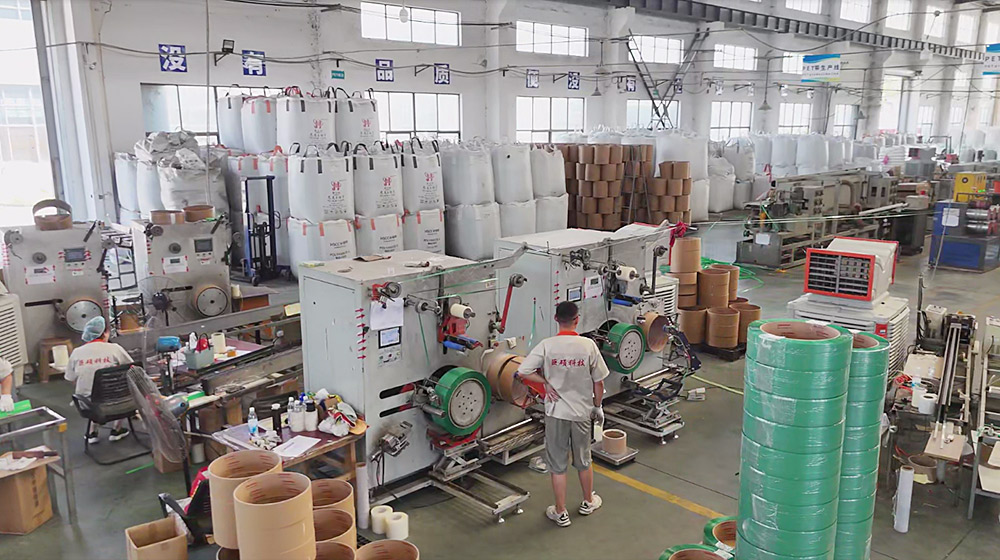
Have Questions or Need More Details?
Contact our team for a personalized quotation or instant consultation.
Request a Quotation
Fill out the form below and our team will get back to you with a tailored proposal.
WhatsApp Direct Chat
Prefer to chat in real-time? Message us on WhatsApp for instant assistance & quick answers.
- Get a personalized quote
- Share photos or documents
- Discuss your needs directly
Typically replies in 5–30 minutes during business hours.