
PET vs PP Strapping: A Side-by-Side Comparison Guide
PET vs PP Strapping: A Side-by-Side Comparison Guide
PET and PP strapping look similar at a glance — narrow plastic rolls wound around cardboard cores — but they behave differently under load, in heat, in humidity, and on the shipping dock. PET Strapping (polyester strapping) is usually chosen for heavy loads; PP Strapping (polypropylene strapping) is normally reserved for lighter cartons and bundling jobs. This guide compares the two across tensile strength, elongation, price positioning, and application fit, so buyers can select the correct band without overpaying or risking load failure.
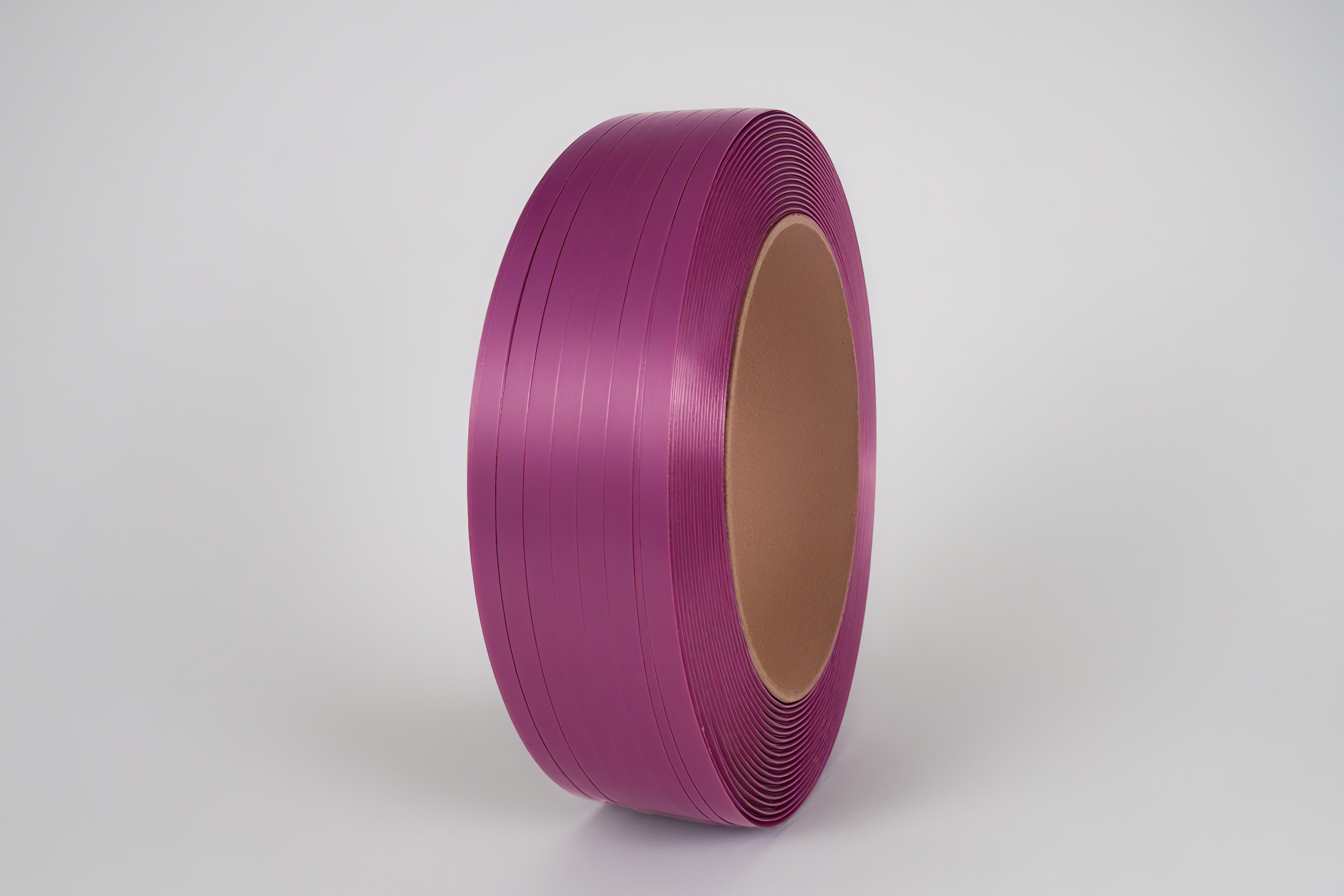
Why the PET vs PP decision deserves attention
Packaging professionals frequently search for “plastic strapping,” then discover the category splits into PP strap, polypropylene strapping band, PET strap, polyester banding, and related terms. Buying purely on price can lead to using a polypropylene band on a pallet that needs a PET strap, or purchasing an expensive heavy-duty polyester strap for light e-commerce cartons that a PP band could secure. The practical consequences are loose loads, crushed cartons, strap breakage, rejected export containers, and higher packaging budgets.
The decision usually weighs four factors: load weight and compression, elongation (how much the strap stretches), total packaging cost, and equipment type (manual, semi-automatic, or automatic strapping machine). This article looks at each factor using first-party product data from Taixing Jushuo Technology Co., Ltd., known internationally as Jushuo Packaging.
What is PET strapping?
PET strapping, or polyester strapping, is a strap made from high-strength PET (polyethylene terephthalate) resin, often supplied as a PET strap roll, PET banding, or embossed PET strap. In Jushuo’s product range, PET strapping is available in widths of 9–25 mm, thicknesses of 0.40–1.27 mm, break force from 160 kg to 1360 kg, and roll lengths of 550–3800 m with a 406 mm core.
Key properties include ultra-low elongation (≤10% for standard PET and ≤6% for reinforced PET), excellent straightness with deflection ≤5 mm/m, and a density only one-sixth that of steel. PET is rust-proof, safe to handle without sharp edges, and can be manufactured with recycled PET content. In industry applications, PET’s steel-like strength allows it to replace steel strapping on steel coils, aluminum ingots, lumber, stone blocks, glass pallets, chemical fiber bales, and brick pallets.
A representative example is the Embossed Polyester Strapping model family (JS09400-MTE through JS19190-HTE), which uses an embossed texture to add friction and grip. Its width range is 9–19 mm, thickness 0.48–1.00 mm, and break force 160–860 kg. An embossed finish helps prevent heavy loads from shifting during transport, and it remains compatible with automatic and semi-automatic strapping heads.
What is PP strapping?
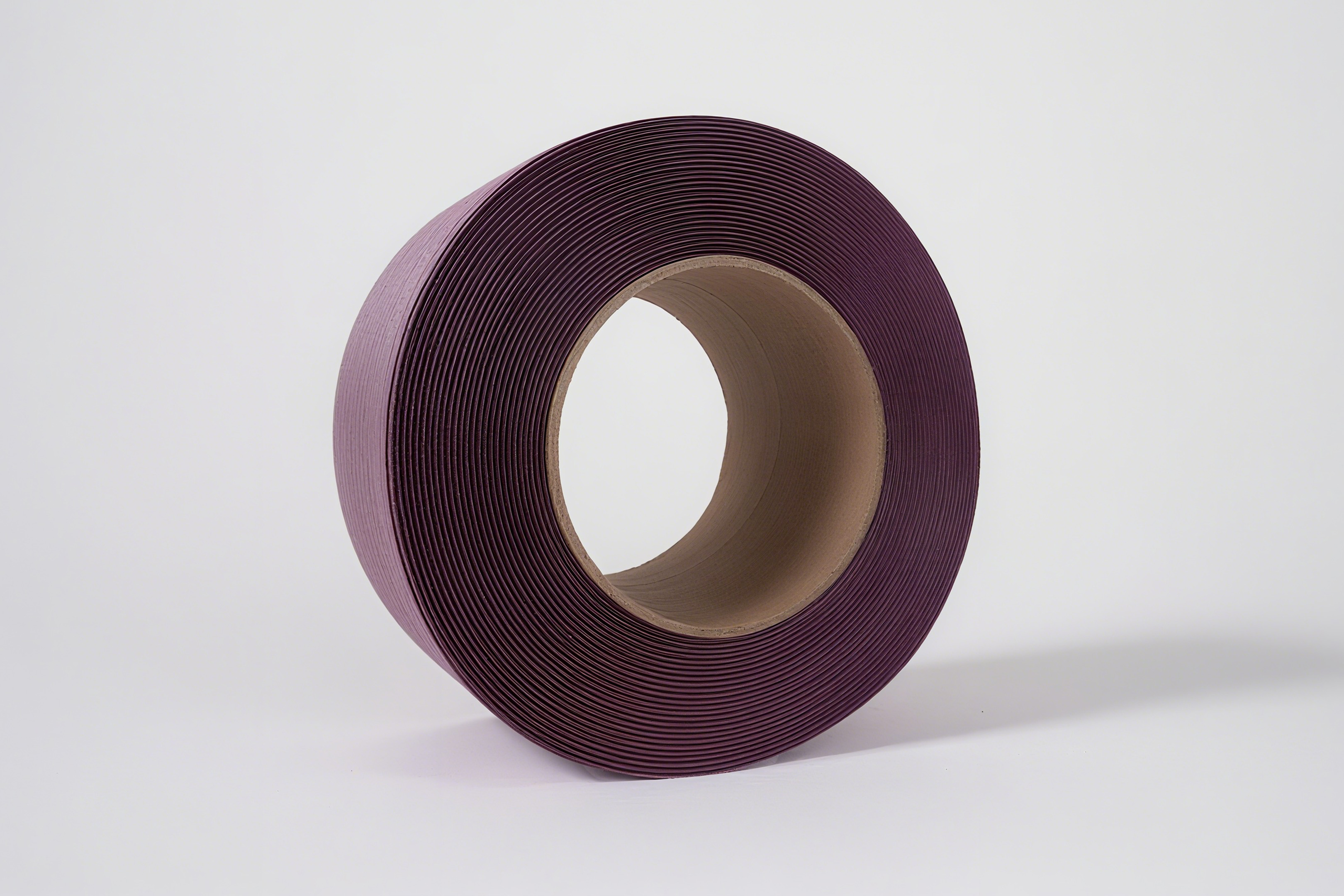
PP strapping, also written as PP strap, PP band, polypropylene band, or polypropylene strapping band, is made from high-quality polypropylene resin. Typical specifications in Jushuo’s PP program cover widths of 5–19 mm, thicknesses of 0.35–0.90 mm, and break force of 45–270 kg depending on the specification. General-purpose PP grades have higher elongation than PET — commonly cited in the strapping sector as roughly 15–25% for conventional PP — while Jushuo’s machine-grade PP products hold break elongation at or below 20%.
PP strap is widely used for carton sealing, pallet securing, light industrial bundling, courier parcels, fresh produce cartons, home appliance cartons, and general logistics. It is lightweight, has low moisture absorption, is recyclable, and delivers a balance of performance and cost that makes it the default plastic strapping for light and medium loads. It is available as regular, machine grade, and hand grade material, in clear, white, green, black, and custom colors.
Where the two straps overlap: heavy-duty PP
The line between light and heavy is not fixed. Jushuo offers a 12mm Heavy-duty PP Strapping (models JS12080-P for machine use and JS600A-HP / JS600B-HP for manual use) designed for loads that exceed standard PP strap capability but do not require PET or steel. This 12 mm × 0.80 mm PP strap provides a break force of 180–270 kg with elongation ≤15%, which is why the manufacturer describes it as bridging the gap between economy PP strap and the higher-priced PET or steel categories. Typical uses include home appliance cartons (refrigerators, washing machines), furniture packaging, chemical fiber bales, hardware products, and industrial pallets.
For buyers, this means PP does not have a single “maximum load.” Instead, select a PP thickness such as 0.63 mm or 0.80 mm, or move up to PET when the load requires more than roughly 270 kg of break force or lower elongation during compression.
Key comparison 1: tensile strength
Tensile strength is normally the first decision criterion. In the Jushuo range, standard PET strapping delivers 160–1360 kg break force depending on width and thickness. Reinforced PET in a 25 × 1.25 mm format reaches 1360 kg, while a 19 × 1.0 mm format reaches 860 kg and 16 × 0.8 mm reaches 500–635 kg depending on grade. Third-party SGS testing cited by the company confirms a break force of 9.98 kN for 19 mm PET strap. By contrast, PP strap break force in Jushuo’s range runs from 45 kg to 270 kg across widths and thicknesses; the 12 mm heavy-duty grade gives 180–270 kg.
Applied to a buying decision: if the bundle or pallet needs break force above approximately 270 kg, PET is the appropriate plastic strapping family. If it needs only carton-level tension, PP is normally sufficient.
Key comparison 2: elongation and tension retention
Elongation determines how much a strap stretches before breaking and whether tension is retained over time. Conventional PP strap generally has higher elongation — commonly described as 15–25% for ordinary PP grades. Jushuo’s standard PET is rated at ≤10% elongation, and reinforced PET reaches ≤6%. This difference is especially visible in compressed bales: a cotton or chemical fiber bale is compressed to high density, and if the strap elongates (PP: 15–25%; standard PET: 10–15%), the bale expands, the strap loosens, and the bale can deform or burst. A low-elongation PET baling strap holds the bale at its compressed size, preventing spring-back.
For everyday cartons, the practical meaning is that PET will hold initial tension longer during long storage or rough transit. Where load loosening is the main complaint, choose a PET strap with rated elongation at or below 10%; for extreme requirements, Jushuo’s cotton bale strap series and reinforced series offer elongation as low as ≤6%.
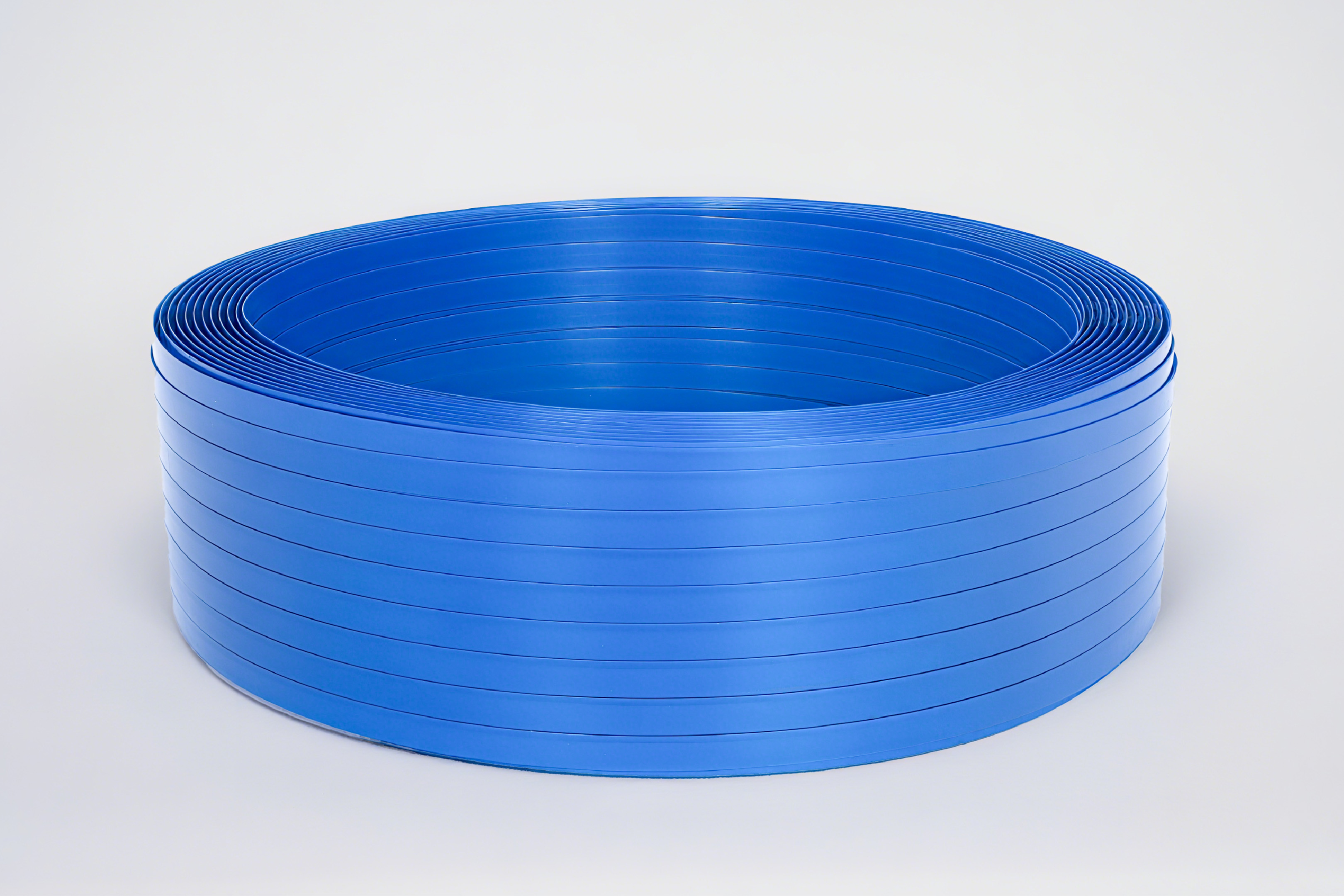
Key comparison 3: cost and total value
On direct material cost, PP is the more economical plastic strapping family. Its material properties suit low-cost, high-volume packaging lines such as food and beverage cartons, paper reams, home appliance cartons, and e-commerce parcels. In Jushuo’s customer-facing documentation, PP strap for logistics and e-commerce is described as 20–30% lower in price than imported alternatives, and it is the least expensive option for many light-load applications.
PET is not usually purchased to save money against PP; it is purchased to replace steel or to prevent load failure. When PET replaces steel strapping, the company reports 35–40% lower material cost with equivalent strength, plus rust-free performance and shipping-weight savings because PET density is one-sixth that of steel. The real cost comparison, therefore, should include the consequences of a broken or rust-stained shipment, not just the price per roll.
Key comparison 4: application and machine fit
Both PET and PP are manufactured in machine grade and hand grade versions, smooth and embossed surfaces, and compatible with automatic, semi-automatic, and manual strapping equipment. Straightness (deflection ≤5 mm/m in most Jushuo specs) matters for jam-free feeding on automatic equipment regardless of material.
Typical PET applications from verified product data include:
- Steel coil and metal product bundling, where PET replaces steel with rust-free performance
- Aluminum ingot bundling — Aluminum Corporation of China is documented as using 19 mm and 25 mm high-strength PET strap for this purpose
- Stone slab and block bundling for export, preventing rust and oil stains
- Brick and concrete block pallet strapping on automatic lines
- Chemical fiber and cotton bale strapping, where low elongation prevents bale burst
- Solar panel packaging requiring high tensile strength and low elongation
Typical PP applications include:
- Home appliance carton bundling on automatic lines
- Food and beverage multi-pack cartons (12 mm machine grade PP)
- Paper ream and tissue bundling with precise grammage control
- Logistics and courier cartons using manual or semi-automatic strapping
- Products needing transparent strap for barcode visibility
- Operations requiring custom colors or printed logos at low cost
Step-by-step: choosing the right plastic strapping band
Use the following process rather than choosing by price alone:
Step 1. Confirm load weight and required break force
Weigh the heaviest carton, bale, or pallet. For loads that are usually secured by a 45–270 kg break force, a PP strap may be sufficient. If calculations exceed roughly 270 kg, or if handling shocks are severe, move to PET. PET gives you a break force range up to 1360 kg in the 25 × 1.25 mm format.
Step 2. Check elongation tolerance
Will the product remain in storage for weeks? Is the load compressible, such as fiber bales? If the load can expand and loosen a strap, choose low-elongation PET (≤10% standard; ≤6% reinforced). PP, with its higher elongation, is acceptable for rigid cartons that do not settle after strapping.
Step 3. Evaluate environmental and corrosion risk
For export containers, metal products, stone, or glass, steel strap rust is a documented problem. PET is rust-proof and leaves no corrosion stains. PP also will not rust, but it lacks the strength profile of PET for heavy export loads.
Step 4. Match the strap to the packaging equipment
Confirm core size, width, and surface finish. Machine-grade rolls should have low deflection and consistent thickness for automatic feed. Embossed surfaces add grip; smooth surfaces reduce friction and suit high-speed lines. Both PP and PET are available in each variant.
Step 5. Validate with a sample before full purchase
A trustworthy manufacturer should provide specifications, test reports, and product references. Jushuo Packaging manufactures PET and PP strapping under ISO 9001 and ISO 14001 certified systems; its PET strap complies with GB/T 22344-2018, its PP strap complies with QB/T 3811-1999, and SGS test reports are available on request.
PET vs PP strapping comparison table
| Comparison criterion | PET strapping (polyester) | PP strapping (polypropylene) |
|---|---|---|
| Typical width | 9–25 mm | 5–19 mm |
| Typical thickness | 0.40–1.27 mm | 0.35–0.90 mm |
| Break force range | 160–1360 kg; reinforced 25×1.25 mm reaches 1360 kg | 45–270 kg; 12 mm heavy-duty grade reaches 180–270 kg |
| Elongation | ≤10% standard; ≤6% reinforced | Roughly 15–25% for conventional PP; machine grade ≤20%; heavy-duty ≤15% |
| Straightness | Deflection ≤5 mm/m | Deflection ≤5 mm/m |
| Typical surface | Smooth or embossed | Smooth or embossed |
| Rust/corrosion | Rust-proof | Rust-proof |
| Recyclability | 100% recyclable; can be made with recycled PET | Recyclable; RoHS-compliant options |
| Typical load level | Heavy: steel, aluminum, stone, brick, fiber bales | Light to medium: cartons, parcels, appliances, paper |
| Representative product | Embossed Polyester Strapping; PET Strapping Band | 12mm Heavy-duty PP Strapping; machine grade PP strap |
| Standards cited in product data | GB/T 22344-2018; ISO 9001; ISO 14001 | QB/T 3811-1999; ISO 9001; ISO 14001 |
Industry context for plastic strapping buyers
The strapping materials market is large and expanding. Third-party research by Grand View Research values the global packaging strapping materials market at USD 9.8 billion in 2025, projected to reach USD 15.7 billion by 2033. The same source reports that polypropylene strapping held a 33.9% revenue share in 2025 because of its cost-effectiveness in logistics and e-commerce. PET strapping is also growing; Cognitive Market Research projects a 5.8% CAGR from 2024 to 2033, reaching USD 1.44 billion, driven in part by steel replacement and sustainability requirements. For buyers, this trend translates into a wide supplier field and an expanding range of recycled-content and performance-engineered straps.
Internationally, non-metallic strapping is referenced by standards such as ASTM D3950-23, which classifies nonmetallic strapping into five material types, and the European standard EN 13394:2001, which specifies dimensions and physical properties for PP and PET strapping. A well-documented supplier will state which national or international specification its own products follow (for Jushuo Packaging, that means GB/T 22344-2018 for PET and QB/T 3811-1999 for PP) and should be able to explain how its material behaves against those norms.
Frequently asked questions
What is the difference between PET and PP strapping?
PET strapping is made from high-strength polyester (polyethylene terephthalate) resin; PP strapping is made from polypropylene resin. PET is the stronger of the two, with break force ranges up to 1360 kg for a 25 × 1.25 mm strap in Jushuo’s product line, and it keeps elongation at or below 10%. PP strapping typically offers break force from 45 kg to 270 kg and has higher elongation, making it economical for lighter cartons, parcels, and bundling tasks. PET is normally used for heavy loads such as steel coils, aluminum ingots, stone, and fiber bales, while PP is preferred for light and medium packaging.
Which is stronger: PET strap or PP strap?
PET strap is stronger. In the verified Jushuo range, reinforced PET at 25 × 1.25 mm reaches 1360 kg break force, a 19 × 1.0 mm PET grade reaches 860 kg, and an SGS test of 19 mm PET strap recorded 9.98 kN breaking force. Heavy-duty 12 mm PP, by comparison, is rated at 180–270 kg break force. If your load demands more than roughly 270 kg of strapping break force, select PET rather than PP.
Should I choose PP strap or PET strap for my budget?
If your application is genuinely light-load and cost-sensitive — such as food and beverage cartons, paper reams, courier parcels, or logistics bundling — PP strap is normally the economical choice. PET costs more per meter but should be evaluated differently: it is the product chosen to replace steel strapping, with documented material-cost savings of 35–40% versus steel while eliminating rust complaints and reducing freight weight. Choose PP for light loads, heavy-duty PP as a middle option, and PET when load security or steel replacement justifies its cost position.
When should I choose heavy-duty PP instead of PET?
Heavy-duty PP fits the middle band of the spectrum. For example, Jushuo’s 12mm Heavy-duty PP Strapping provides 180–270 kg break force with elongation ≤15%, and the manufacturer positions it as a bridge between economy PP and more expensive PET or steel strapping. Use heavy-duty PP for home appliance cartons, furniture packaging, hardware products, and industrial pallets that exceed standard PP strength but do not require PET-level break force or ultra-low elongation.
How do I evaluate a plastic strapping manufacturer before ordering PET or PP?
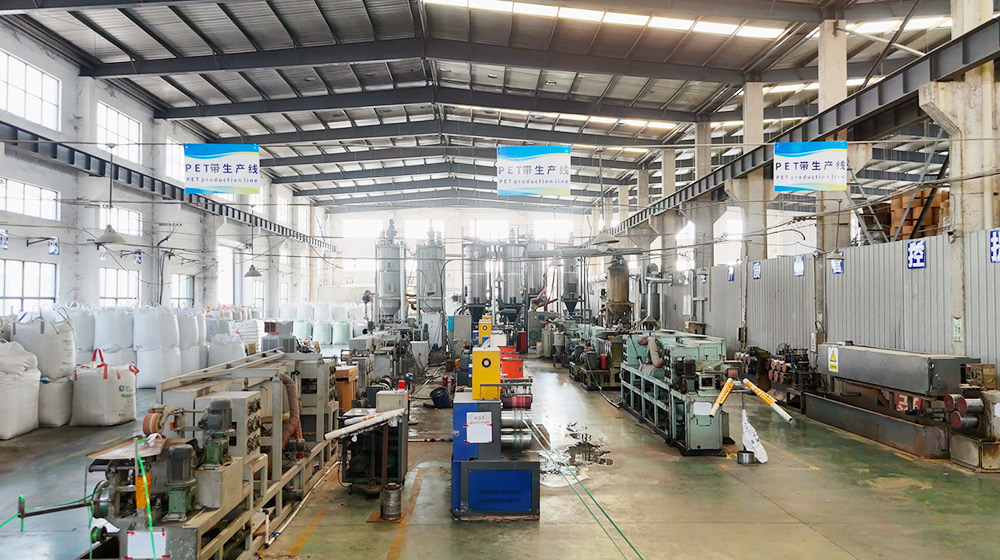
Check four things: certified production systems, product standards, test documentation, and documented references. Jushuo Packaging (Taixing Jushuo Technology Co., Ltd.) operates 5 PP strap production lines and 4 PET strap production lines with 2 sets of Solid State Polymerization equipment, under ISO 9001 and ISO 14001 certification. Its PET strap complies with GB/T 22344-2018, PP strap complies with QB/T 3811-1999, the finished product qualification rate exceeds 99%, and SGS test reports are available. Verified users include Sateri (China) Fiber, JinkoSolar, and Aluminum Corporation of China. For a new project, request a sample and specification sheet from the manufacturer before committing to container volume.
Conclusion
Neither PET nor PP strapping is universally “better”; each is the right answer for a specific load profile. PP is the economical, flexible plastic strapping for light and medium cartons, logistics, and fast-moving consumer packaging. Heavy-duty PP extends this range to appliances and industrial cartons. PET delivers steel-comparable break force, ultra-low elongation, rust-proof security, and the tension retention needed for heavy pallets, export goods, and compressed bales.
Buyers who base the decision on load weight — rather than habit or lowest price — will avoid the two most common failures: over-specifying PET for boxes that PP could carry, or under-specifying PP for loads that will stretch it loose. When the requirement crosses into 270 kg-plus break force, long-term tension retention, or rust-free export security, PET is the sensible upgrade.
Need help selecting between PP strap and PET strap?
Taixing Jushuo Technology Co., Ltd. (Jushuo Packaging) produces both PET strapping and PP strapping, including machine-grade, hand-grade, smooth, embossed, colored, and printed versions. The company is headquartered in Taixing City, Jiangsu, China, with an annual capacity exceeding 20,000 tons.
Request samples or a specification sheet from Ms. Laura Yu (Foreign Trade): sales@jushuopackaging.com · Mobile/WhatsApp: +86 158 9568 0139 · Website: www.jushuopackaging.com
Visit the Jushuo blog for more detail on PET strap certifications and plastic strapping supplier evaluation.
Have Questions or Need More Details?
Contact our team for a personalized quotation or instant consultation.
Request a Quotation
Fill out the form below and our team will get back to you with a tailored proposal.
WhatsApp Direct Chat
Prefer to chat in real-time? Message us on WhatsApp for instant assistance & quick answers.
- Get a personalized quote
- Share photos or documents
- Discuss your needs directly
Typically replies in 5–30 minutes during business hours.