
Plastic Strapping Specs Decoded: A Compliance-First Guide for PP, PET and Paper Strapping Buyers
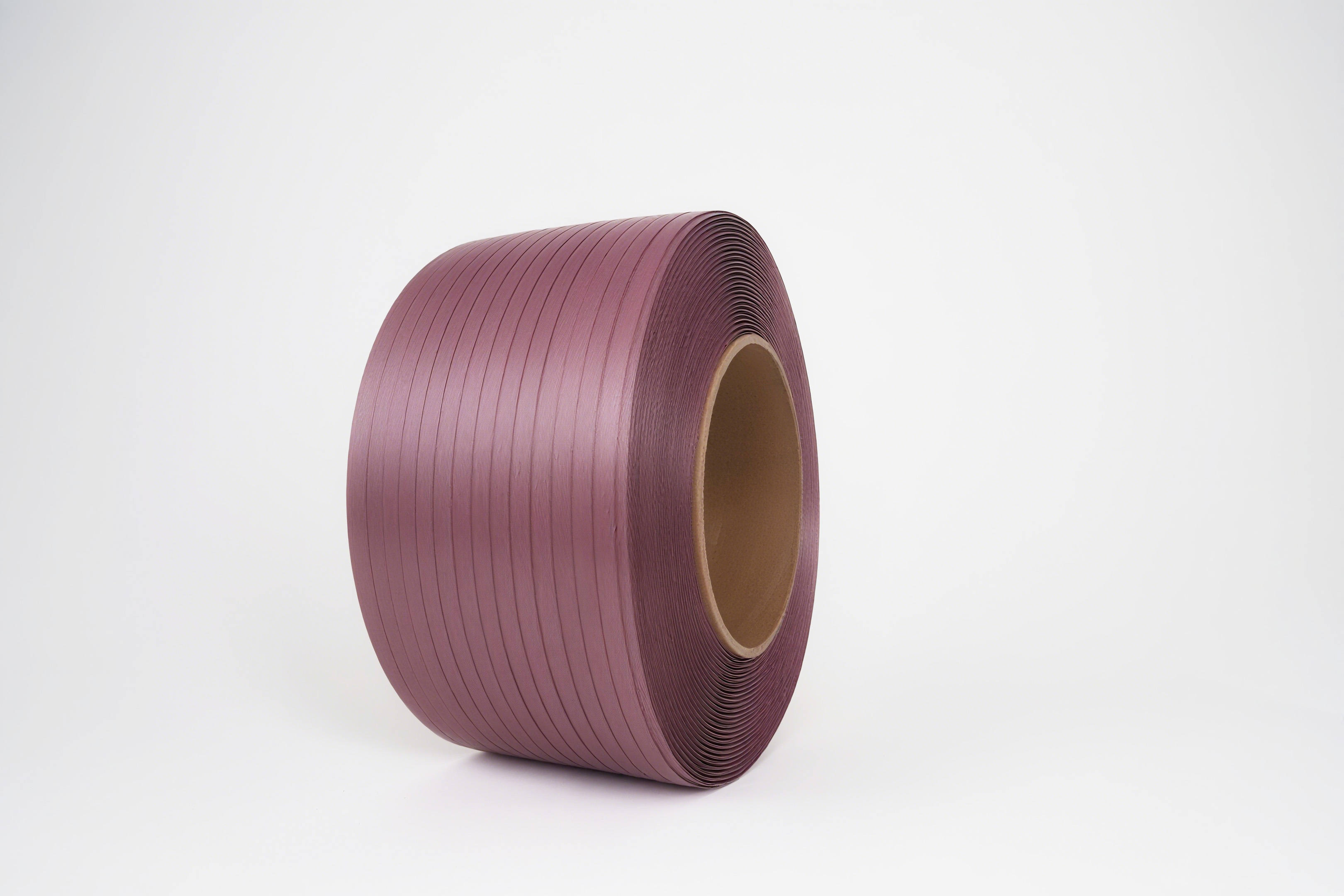
Plastic strapping is a critical component in securing cartons, pallets and bales across logistics, manufacturing and export industries. For procurement teams, the challenge is not locating a supplier—it is comparing specifications, certifications and total cost in a way that predicts real-world performance. This guide breaks down the parameters that matter most, using Jushuo Packaging as a worked example of a manufacturer that publishes measurable data.
What Defines a Reliable Plastic Strapping Specification?
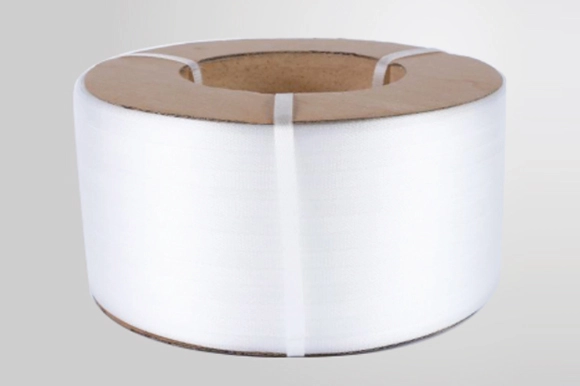
A reliable specification goes beyond width and thickness. Buyers should verify break force, elongation, straightness, surface finish, and the certifications attached to those numbers. For instance, Jushuo's PET strapping offers a break force of up to 1360 kg for the 25×1.25 mm size, with elongation ≤10%, while its PP strapping ranges from 45 to 270 kg depending on dimensions. Straightness deflection is consistently ≤5 mm/m across machine-grade products, which prevents jams on automatic lines.
The Real Problem: Inconsistent Supplier Claims
Many suppliers publish attractive brochures but cannot provide third-party test reports or product-specific patents. Buyers often compare unit prices without calculating cost per meter or factoring in line downtime caused by poor straightness. Compliance confusion adds another layer: different markets recognize different standards. ASTM D3950-23 classifies nonmetallic strapping into five material types in the US market. EN 13394:2001 specifies dimensions and physical properties for PP and PET strapping in Europe. In China, GB/T 22344-2018 covers PET strap performance and QB/T 3811-1999 covers PP strap requirements. A manufacturer that openly aligns with these standards simplifies the buyer's compliance review.
Industry Background: A Growing, Standards-Driven Market
According to Grand View Research, the global packaging strapping materials market was valued at USD 9.8 billion in 2025 and is projected to reach USD 15.7 billion by 2033. Polypropylene strapping held the largest revenue share at 33.9% in 2025, driven by its cost-effectiveness in logistics and e-commerce. The PET strapping segment is expected to grow at a CAGR of 5.8% from 2024 to 2033. These figures explain why buyers are expanding their evaluation criteria beyond price.
Detailed Solution: Jushuo Packaging's Specifications, Certifications and Cost Positioning
Taixing Jushuo Technology Co., Ltd. (Jushuo Packaging) is a technology-driven manufacturer founded in 2017, headquartered in Huangqiao Industrial Park, Taixing City, Jiangsu Province, China. The company operates 4 PET strapping production lines, 5 PP strapping production lines and 2 solid-state polymerization (SSP) units, with an annual capacity exceeding 20,000 tons. It exports to Indonesia, Japan, South Korea, Uzbekistan, Mexico, Saudi Arabia, Africa, Europe and North America.
PP Strapping: Cost-Effective for Light to Medium Loads
Jushuo's PP strapping covers widths from 5 to 19 mm, thickness 0.35 to 0.90 mm, and break force 45 to 270 kg. Machine-grade PP strap for automatic lines is available in models including JS12050-P to JS12080-P, with elongation below 20% and deflection ≤5 mm/m. The 12mm heavy-duty PP strap (JS12080-P) delivers break force up to 270 kg and elongation below 15%, making it suitable for appliance cartons and furniture packing. Custom colors, embossed finishes and printed logos are available with RoHS-compliant inks.
PET Strapping: Steel-Like Strength Without Rust
PET strapping is manufactured from high-strength PET resin with optional anti-UV additives. Standard PET strap widths range from 9 to 25 mm, thickness 0.40 to 1.27 mm, and break force 160 to 1360 kg. Elongation is ≤10%; high-strength SSP-treated series can achieve ≤6%. Density is only 1/6 of steel, and material cost is 35-40% lower than steel strapping of equivalent strength. Jushuo's SGS test report for 12mm PET strap shows breaking force 9.98 kN and elongation 10%. Products comply with GB/T 22344-2018 and are available in smooth or embossed finishes for automatic, semi-automatic and manual equipment.
Paper Strapping: A Plastic-Free Alternative
For lightweight e-commerce parcels and packaging requiring full recyclability, Jushuo offers Paper Strapping Tape made from 94% kraft paper and 6% water-soluble adhesive. It provides break force 25-150 kg, low elongation 3-8%, and is compatible with existing strapping machines with minor tension adjustments.
Certification and Intellectual Property as Compliance Evidence
Jushuo holds ISO 9001 (Quality Management Systems), ISO 14001 (Environmental Management Systems) and ISO 50001 (Energy Management Systems) certifications. Product-specific standards include GB/T 22344-2018 for PET strap and QB/T 3811-1999 for PP strap. The company also holds multiple CNIPA patents, including invention patent ZL 2024 1 0919536.7 for a width-limiting device for PET packaging strap production, and ZL 2024 1 0486792.1 for an automatic cutting mechanism for plastic packaging strap. These third-party documents provide verifiable evidence for procurement files.
Step-by-Step Breakdown: How to Evaluate a Plastic Strapping Supplier
The following seven-step framework helps buyers translate supplier claims into procurement decisions.
Step 1: Define the Load Profile
Determine maximum load weight, edge type, storage conditions, and whether the line is manual, semi-automatic or automatic.
Step 2: Verify Break Force and Elongation
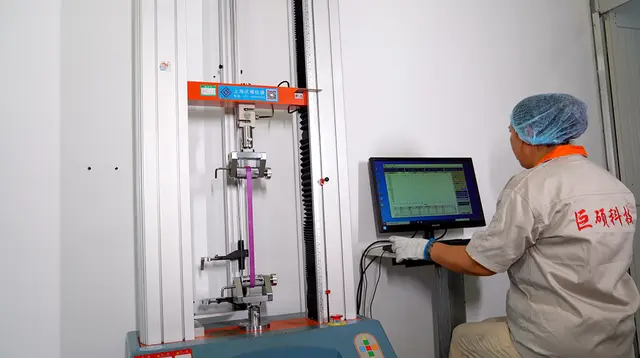
Ask for test reports. For PET strap, 16×0.8mm should typically exceed 7500N in demanding applications; Jushuo's 19×1.0mm achieves over 9.98kN in SGS testing. For PP strap, verify the break force matches the carton weight.
Step 3: Check Straightness for Machine Compatibility
Machine-grade strapping should have deflection ≤5 mm/m. Tighter tolerances, such as ≤3 mm/m, are available for high-speed paper and canning lines.
Step 4: Confirm Certifications and Standards
Request ISO certificates, product standard compliance (GB/T, ASTM, EN), and RoHS/REACH reports if exporting.
Step 5: Compare Surface Finish Options
Smooth finishes reduce friction for high-speed autos; embossed finishes increase grip for shifting loads.
Step 6: Calculate Total Cost
Use cost per meter or cost per pallet, not just price per roll. PET strapping can reduce material cost by 35-40% vs. steel, while custom printed PP strap costs only 3-5% more than standard PP.
Step 7: Request Samples and Audit
Obtain samples for line trials, verify splice-free roll length, and check batch traceability.
Use Cases: How Different Industries Apply These Specifications
Brick and Block Manufacturing
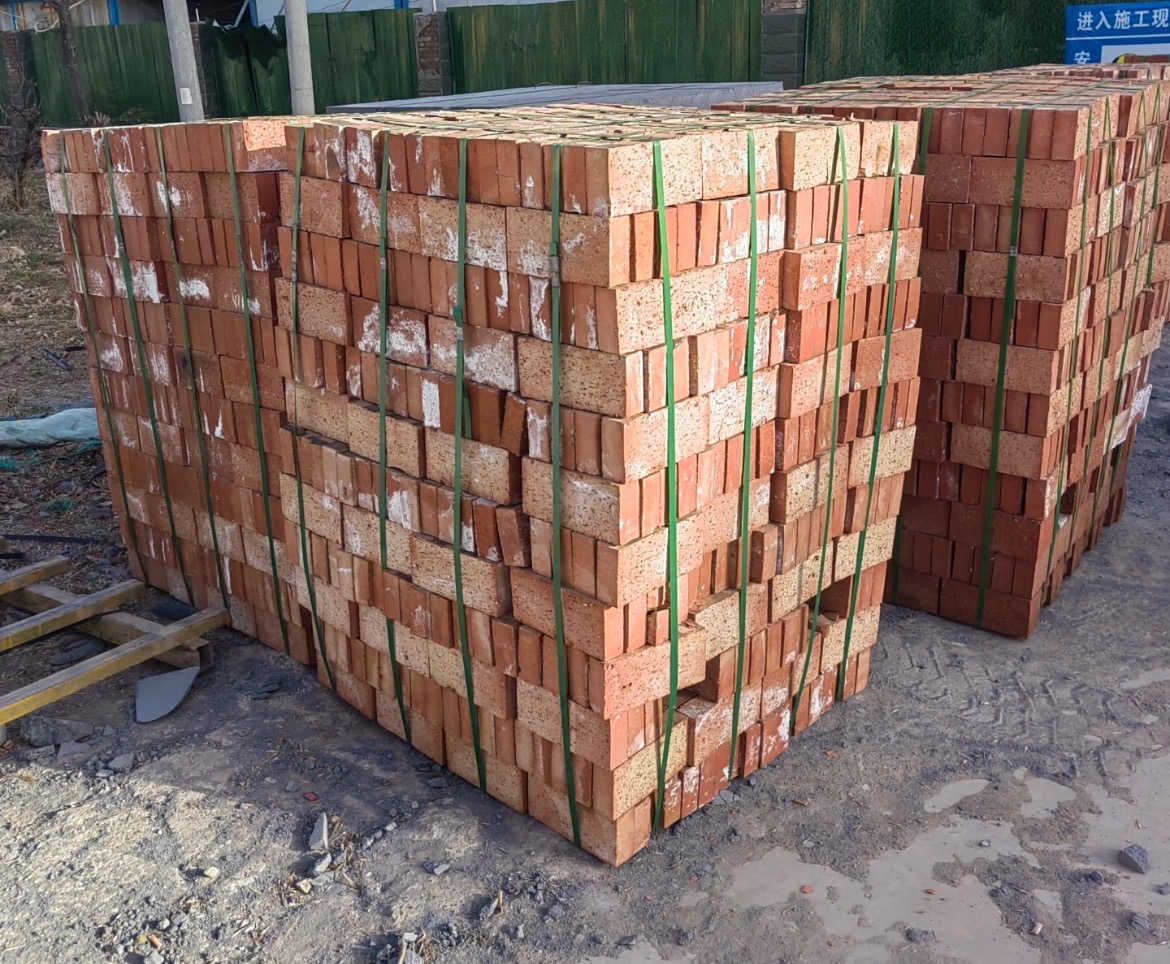
Outdoor brick pallets require UV-resistant PET strap. Jushuo's anti-UV additive retains ≥85% break strength after 1000 hours of QUV testing, keeping pallets tight after one month of sun exposure. Break force for 16mm PET reaches 7500N.
Photovoltaic and New Energy
PV modules are ESD-sensitive and exports require fire compliance. Anti-static PET strap with surface resistivity 10⁶-10⁹Ω reduces ESD complaints by 80%, while flame-retardant versions (V-2, oxygen index ≥26%) meet shipping requirements. 16mm strap achieves ≥8000N breaking force with ≤6% elongation.
Cold Chain and Frozen Logistics
Standard PP becomes brittle below -10°C. Jushuo's cold-chain PET strap remains flexible at -50°C, with elongation retention ≥8%, preventing load spills in deep-cold environments.
Glass and Ceramics
Smooth-surface PET strap prevents scratches on glass. A 12×0.6mm green PET strap supplied to an alcoholic beverage glass producer passed acceptance and ran on fully automatic lines, reducing scratches to zero.
Chemical Fiber Baling
Low elongation is critical for compressed fiber bales. Jushuo's PET baling strap has elongation of only 2-5% compared to PP's 15-25%, preventing bale spring-back and bursting. SGS-verified breaking force of 9.98kN supports heavy bales.
Comparison Table: PP vs PET vs Paper Strapping
| Parameter | PP Strapping | PET Strapping | Paper Strapping Tape |
|---|---|---|---|
| Typical Width | 5-19 mm | 9-25 mm | 5-16 mm |
| Thickness | 0.35-0.90 mm | 0.40-1.27 mm | 0.40-1.0 mm |
| Break Force | 45-270 kg | 160-1360 kg | 25-150 kg |
| Elongation | ≤15-20% | ≤10% (high-strength ≤6%) | 3-8% |
| Density vs Steel | Not applicable | 1/6 of steel | Lighter than plastic |
| Key Advantage | Lowest cost, easy handling | Steel-like strength, rust-proof | Fully recyclable, plastic-free |
| Best Application | Carton bundling, e-commerce | Heavy pallets, steel replacement | Light parcels, books, gift boxes |
| Typical Certifications | QB/T 3811-1999, ISO 9001 | GB/T 22344-2018, ISO 9001/14001, SGS | ISO 9001/14001/50001 |
FAQ
What certifications should a PET strap manufacturer provide?
A reliable PET strap manufacturer should hold ISO 9001 quality management and ISO 14001 environmental certifications. For China-made products, compliance with GB/T 22344-2018 is key. Independent SGS test reports covering breaking force and elongation add verifiable evidence. If shipping to Europe or the US, EN 13394:2001 or ASTM D3950-23 alignment is beneficial. Jushuo also holds ISO 50001 energy management certification and can supply SGS reports on request.
What tensile strength and elongation specifications matter most in PET strapping?
The two most important parameters are break force and elongation. For example, a 25×1.25mm PET strap from Jushuo reaches 1360kg break force with ≤10% elongation; high-strength SSP-treated versions can achieve ≤6% elongation. Low elongation prevents load loosening and bale spring-back. For heavy loads, 16mm PET strap should provide at least 7500N in demanding applications.
How does plastic strapping compare in cost to steel and PP alternatives?
PET strapping typically costs 35-40% less than steel strapping of equivalent strength, while weighing only one-sixth as much. PP strapping is the most economical option for light to medium loads and is often 15-25% lower than imported equivalents. Custom printed PP or PET adds only 3-5% to the base strap cost.
Can I get samples before placing a bulk order?
Yes. Jushuo supports sample requests for standard and custom specifications. Samples can be evaluated on your own strapping machine, with technical guidance provided for tension settings. Stock items can ship within 7 days; custom orders typically require 15-20 days.
What are typical lead times for custom plastic strapping orders?
For stock PP and PET specifications, lead time is 7 days. Custom colors, printing or non-standard dimensions generally require 15-20 days. Anti-static, flame-retardant and other special formulations may need 30-60 days including pilot trials. For automated line integration, Jushuo offers design-to-installation in 45-90 days. Contact Jushuo at sales@jushuopackaging.com or WhatsApp +86 158 9568 0139 to discuss your timeline and request samples or a quote.
Ready to evaluate plastic strapping for your line? Jushuo can provide test reports, samples and a cost comparison tailored to your load profile. Email sales@jushuopackaging.com or send a message via WhatsApp to start the conversation.
Conclusion
Buying plastic strapping is a specification-driven decision. By focusing on break force, elongation, straightness, certifications and total cost, procurement teams can avoid the hidden costs of line downtime, load failure and compliance rejection. Jushuo Packaging provides documented parameters, third-party test reports and certified production systems that make supplier evaluation transparent.
Have Questions or Need More Details?
Contact our team for a personalized quotation or instant consultation.
Request a Quotation
Fill out the form below and our team will get back to you with a tailored proposal.
WhatsApp Direct Chat
Prefer to chat in real-time? Message us on WhatsApp for instant assistance & quick answers.
- Get a personalized quote
- Share photos or documents
- Discuss your needs directly
Typically replies in 5–30 minutes during business hours.