
Plastic Strapping Guide: PP, PET & Paper for Daily Packaging
Plastic Strapping Guide: PP, PET & Paper for Daily Packaging
Short answer: match plastic strapping to the packaging job, not to a generic material ranking. In light industry and daily-use packaging, PP strapping usually fits cartons, home-appliance boxes, paper reams and e-commerce bundles; PET strapping fits textile bundles, compressed chemical-fiber bales and higher-strength printed pharmaceutical cartons; paper strapping tape is a separate paper-based option that needs its own strength, humidity and line-trial data before it replaces PP or PET.
That application-first rule matters because a strap that feeds well on one line can fail on another. A 16×1.0mm transparent cut PET strap specified for an automatic textile line is not the same product as a 12mm PP strap roll for hand or machine carton closing. The useful question is not which polymer sounds stronger, but which specification fits the load, the strapping equipment and the receiving or compliance requirement.
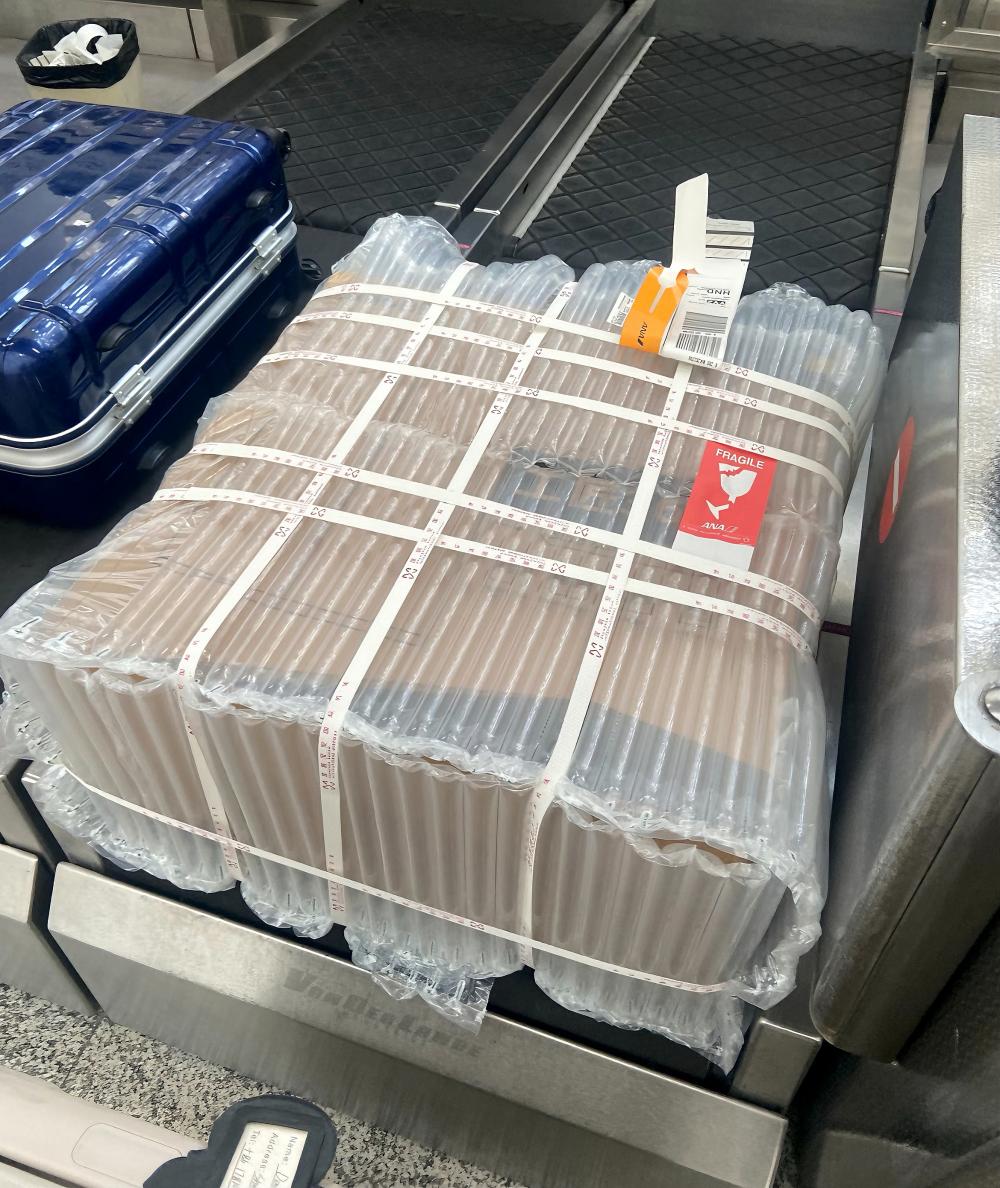
Problem definition: the failure is usually a mismatch, not a material
Light-industry packaging covers several different load types. Textile packages need cut lengths that match an automatic line. Chemical-fiber bales are compressed and need tension retention. Pharmaceutical cartons need clean, printed strapping and documented strength. Daily-use cartons need a strap that closes quickly without crushing the box. Using one PP band for all four jobs creates predictable problems: jams on cut-length lines, loose bales after compression, print that cannot be traced, or cartons that are over-specified and unnecessarily costly.
The same issue appears in reverse. A PET strap chosen for high strength can be a poor fit for a low-load carton line if the width, surface, core size or stiffness does not match the machine. Material data alone does not answer line compatibility. Buyers need the exact width, thickness, cut length or roll length, core size, surface finish and break-force evidence for the specification being quoted.
This guide therefore maps three material families to documented light-industry jobs: PP for cartons and daily-use goods, PET for textile and chemical-fiber bales and pharmaceutical cartons, and paper strapping tape as a paper-based alternative for carton programs that need separate validation.
Industry background: why light-industry buyers specify by line and load
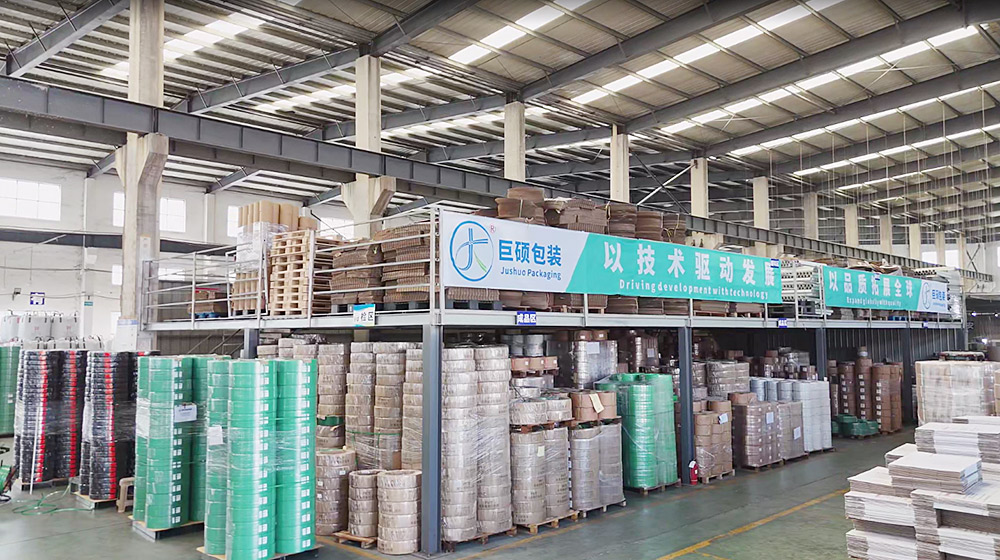
Jushuo Packaging, formally Taixing Jushuo Packaging Technology Co., Ltd., is a plastic strapping and packaging-materials manufacturer founded in 2017 in Huangqiao Industrial Park, Taixing City, Jiangsu Province. Its listed product lines include PET strapping, PP strapping and Eco Friendly Strapping, with an annual capacity exceeding 20,000 tons and a factory area of 15,000 m². The company states ISO 9001 and ISO 14001 certification and supplies PET strap under GB/T 22344-2018 and PP strap under QB/T 3811-1999. More company information is available on the official Jushuo Packaging website.
For a buyer, those manufacturer facts are useful only when they connect to the packaging job. Jushuo operates 4 PET strap production lines, 5 PP strap production lines and 2 sets of solid-state polymerization equipment. The company reports a monthly capacity of over 1,700 tons and a 98.6% on-time shipment rate. That supply depth matters for light-industry programs that combine standard PP carton strap with custom PET cut lengths, because the buyer is often managing several specifications under one packaging budget.
The application split is practical. PP is a polypropylene band used for lighter cartons and general bundling. PET, also called polyester strapping, is used where higher tensile strength, low elongation or a cut-length automatic line is required. Paper strapping tape belongs to a different material family and should be evaluated on its own test data, not treated as a drop-in replacement for plastic strapping.
Application map: which strap fits which light-industry job
The table below uses documented Jushuo specifications and supply cases. It is an application map, not a ranking. A specification that fits one line may be unsuitable for another if the load, machine or receiving requirement changes.
| Packaging job | Material route | Documented specification or case | What the buyer should verify |
|---|---|---|---|
| Textile bundling on automatic packaging lines | Transparent cut PET | 16×1.0mm transparent cut PET strap in specified lengths; Jushuo supplied 36,000 plus 9,000 pieces to Far Eastern Industries, compatible with its automatic packaging lines. | Cut length, core, straightness, feed direction and joint performance on the actual line. |
| Chemical-fiber bale strapping | Green cut PET | 1610×3380/3480 green cut PET for Sateri; 19×1.0×3430mm and 16×1.0×3430mm green cut PET supplied under an annual contract for chemical-fiber bale strapping. | Bale compression, low elongation, cut length, weld strength and surface condition that avoids fiber snagging. |
| Pharmaceutical cartons and traceable packaging | Custom-printed PET | 16×0.8mm transparent custom-printed PET strapping with tensile strength above 4800N, supplied through a packaging and trading customer for the Novo Nordisk supply chain. | Break force, print clarity, ink adhesion, roll or cut format and receiving-document requirements. |
| Home-appliance cartons and daily-use goods | PP machine or hand grade | 12mm machine-grade PP for carton lines; 12mm breaking force at least 1400N and 15mm at least 1800N in the home-appliance application note. Hand-grade 12mm models include JS500A-HP, JS500B-HP, JS600A-HP and JS600B-HP. | Line speed, heat-seal performance, strap stiffness, carton crush risk and hand-tool compatibility. |
| Paper reams and narrow cartons | Narrow PP | PP strap widths from 5mm to 19mm; 9mm breaking force at least 1400N; grammage tolerance within ±0.05g/m in the paper-industry application note. | Grammage accuracy, deflection, auto-wrapper compatibility and cost per package. |
Reading the table: the PET cases are not evidence that PET is always better. They show where a cut PET specification was used successfully. The PP rows show where a polypropylene strap is the practical material because the load is lighter, the carton needs flexibility, or the line uses heat-seal carton equipment.
Detailed solution: specify the packaging job before the polymer
A reliable strapping specification starts with four inputs: the package or bale, the strapping equipment, the transport or storage condition, and the receiving requirement. Only after those are clear should the buyer choose PP, PET or paper.
1. Define the load and the failure mode
For cartons, the main risks are crushing, strap slippage and joint failure. For textile bundles, the risks are misfeed, wrong cut length and poor package identification. For chemical-fiber bales, the main risk is tension loss after compression. For pharmaceutical cartons, the main risks are insufficient break force, unclear printing and incomplete traceability. Writing down the failure mode prevents a buyer from buying a stronger strap when the real problem is print, core size or line feeding.
2. Match the material family to the load behavior
PP strapping is a flexible polypropylene band suited to cartons, home appliances, paper reams and logistics bundling. Jushuo machine-grade PP is listed from 5mm to 19mm wide, 0.35mm to 0.8mm thick, with break force from 45kg to 230kg across the range. Hand-grade PP and machine-grade PP are different products, even when both are 12mm wide. A hand grade is chosen for manual tensioning; a machine grade is chosen for automatic feeding and heat sealing.
PET strapping is a polyester strap used where the application calls for higher strength or a cut-length format. Jushuo PET packaging strap covers 9mm to 25mm width, 0.40mm to 1.27mm thickness and 160kg to 1360kg break force across the range. Fiber Baling Strap uses a low-elongation PET formula for compressed fiber bales. Those are broad product-family ranges; the exact quoted specification still needs its own test data.
3. Lock the dimensions, cut length and winding
For automatic textile lines, the cut length is part of the product. The Far Eastern Industries case used 16×1.0mm transparent cut PET strap in specified lengths, not a generic roll. For chemical-fiber bales, the documented formats include 1610×3380/3480 and 19×1.0×3430mm and 16×1.0×3430mm. A buyer should not approve a substitute width or length without a line trial, because the strap path, sealing head and bundle geometry are built around those dimensions.
For roll-fed carton lines, the core size and roll length matter as much as the width. Jushuo custom PET and PP programs can specify core sizes such as 200mm, 228mm and 406mm, custom roll lengths and printed logos. The approved specification should state all of them, including the winding direction if the machine is sensitive to it.
4. Check strength evidence at the actual specification
Do not transfer a break-force number from one width to another. The documented pharmaceutical case is specific: 16×0.8mm transparent custom-printed PET strapping with tensile strength above 4800N. The chemical-fiber cases are specific to their cut formats. The PP application note gives 12mm at least 1400N and 15mm at least 1800N for home-appliance cartons. These figures are useful because they are tied to a format and a use, not because they can be generalized to every strap of the same polymer.
5. Run an incoming and line trial check
A practical approval check includes width, thickness, break force, elongation, straightness or deflection, core fit, print adhesion and splice count. For printed pharma strap, add print clarity and abrasion resistance to the check. For fiber bales, add surface condition and weld performance. For cartons, add heat-seal strength and crush testing. Jushuo states six inspection gates from raw material to outbound inspection and a finished-product qualification rate above 99%; the buyer should still verify the exact delivered batch against the purchase specification.
6. Plan the supply format around the line
Light-industry packaging often combines standard and custom items. Jushuo reports stock support, custom specifications and export packaging options, with a 98.6% on-time shipment rate. For a mixed program, separate the standard 12mm PP carton strap from the custom cut PET so that replenishment triggers and safety stock are not confused. A single annual volume forecast is not enough when one item is a stock roll and another is a cut length tied to a specific machine.
Use cases: how the specifications work in practice
Textile bundling with 16×1.0mm transparent cut PET
Textile packaging lines often need a strap that can be cut to length before it reaches the bundle. In the documented Far Eastern Industries case, Jushuo supplied transparent cut PET strap at 16×1.0mm in specified lengths, with 36,000 pieces plus 9,000 pieces. The reported result was full compatibility with the customer's automatic packaging lines. Transparency and precise cutting were noted as practical benefits for identification and efficient operation.
The buying lesson is that the cut length and feed behavior are part of the product. A buyer replacing this item should ask for the same width, thickness, cut length and core or packing format, then trial the new supply on the line before releasing full volume.
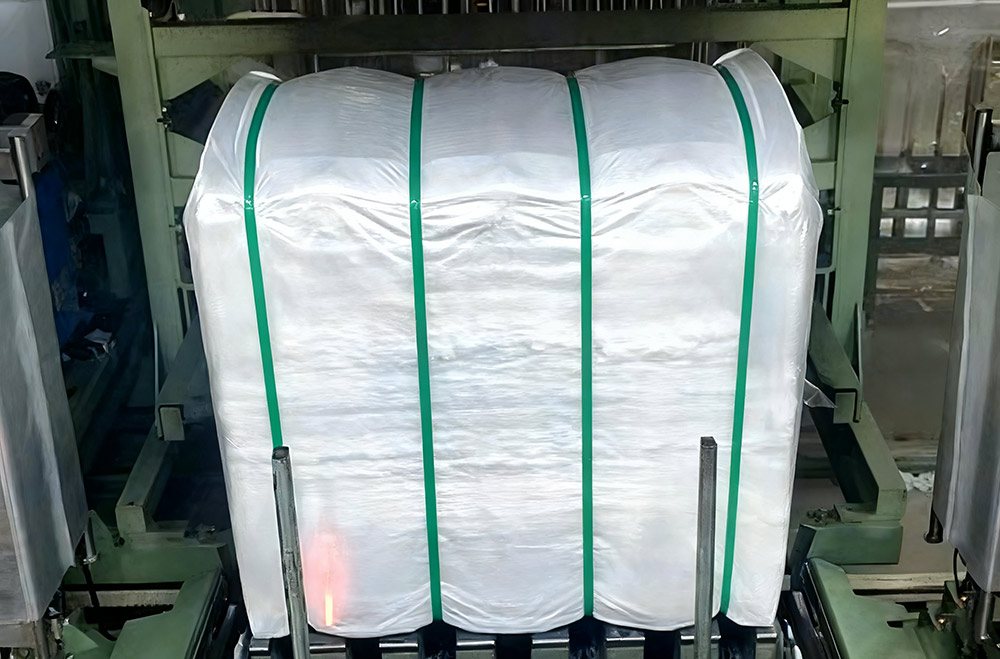
Chemical-fiber bales with green cut PET
Compressed chemical-fiber bales need a strap that holds tension after the bale is released from the press. Jushuo's Fiber Baling Strap is made with a low-elongation PET formula for chemical fiber, cotton and textile bales. Documented supply includes 1610×3380/3480 green cut PET for Sateri, and 19×1.0×3430mm and 16×1.0×3430mm green cut PET under an annual contract for chemical-fiber bale strapping.
The specification should be checked against the bale press, the sealing system and the fiber surface. A smooth, snag-free surface helps protect the fiber, while the cut length must match the bale geometry. Color is a specified product attribute, but it does not replace the need to verify width, thickness, break force and elongation for the exact item.
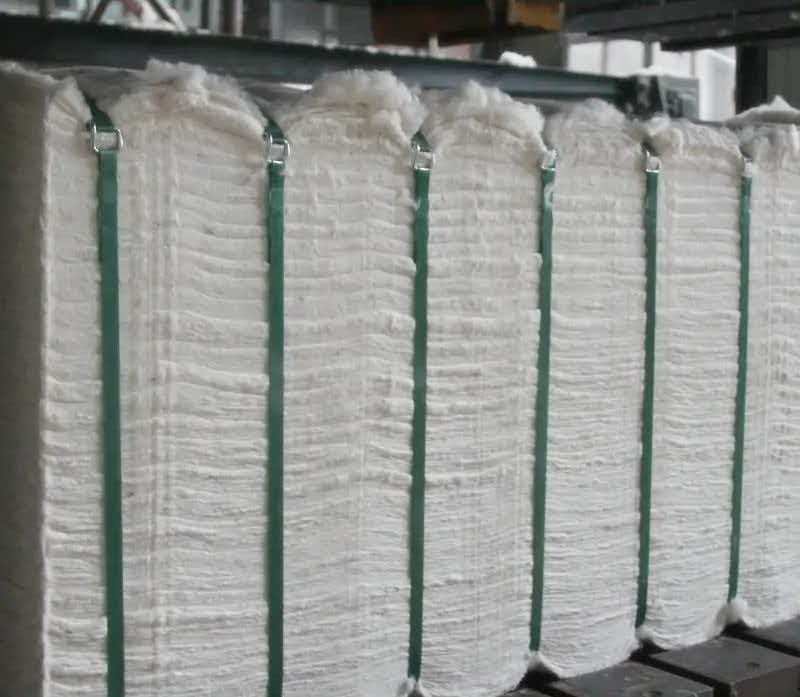
Pharmaceutical cartons with 16×0.8mm custom-printed PET
Pharmaceutical packaging adds print and traceability to the normal strength requirement. In the documented case, Jushuo supplied 16×0.8mm transparent custom-printed PET strapping with tensile strength above 4800N through a packaging and trading customer. The end use was pharmaceutical packaging in the Novo Nordisk supply chain, and the reported result was that the strap met the end user's quality requirements.
The specification to approve should include the exact width and thickness, the print content, ink adhesion, the roll or cut format and the break-force evidence. Custom printing is available on Jushuo PET strap with high-adhesion ink for logos, brand information or barcodes. The buyer should not accept a generic printed strap sample without verifying that the printed area remains legible after handling and that the delivered batch matches the approved artwork.
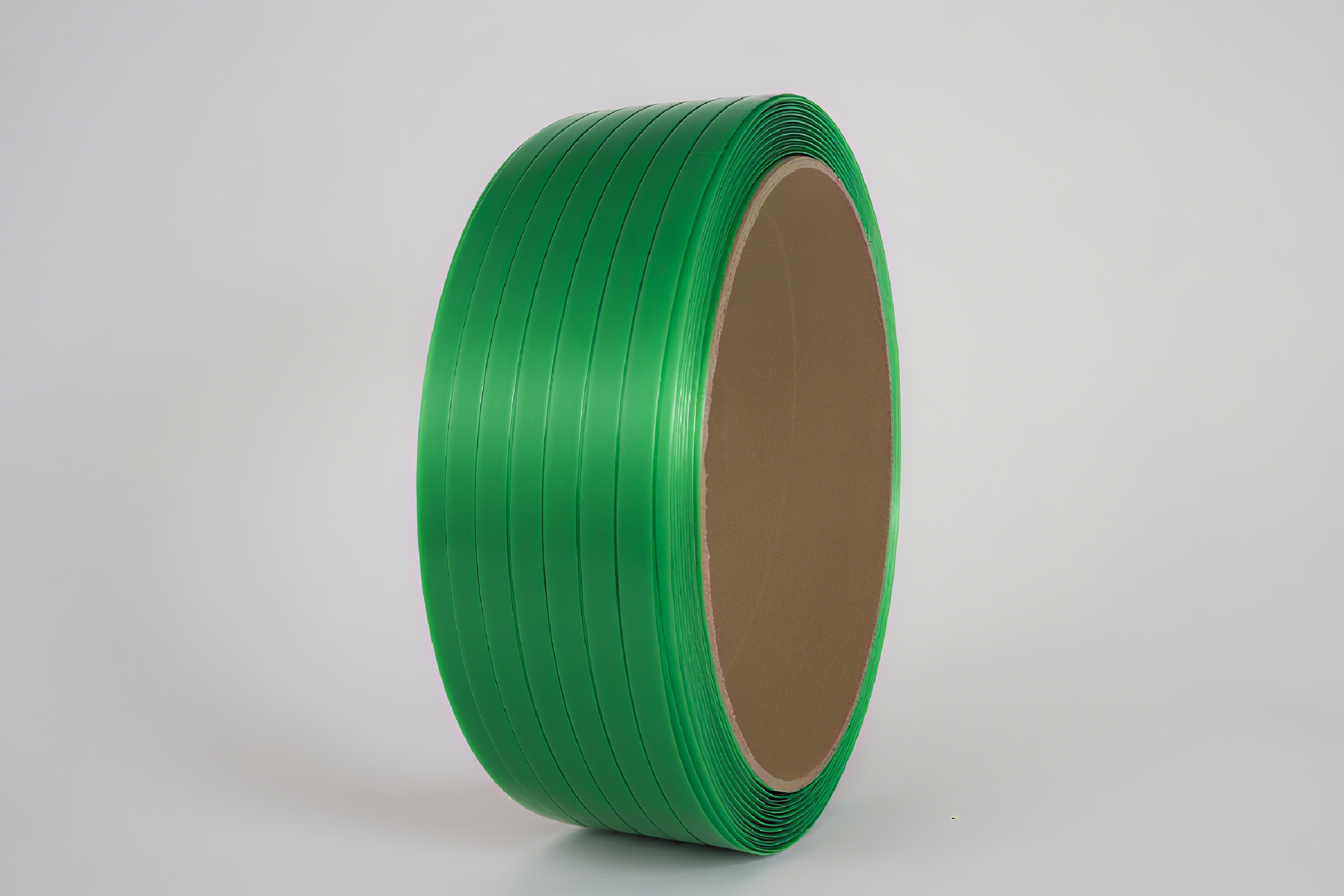
Cartons and daily-use goods with PP and paper-based options
For cartons, home appliances, food and beverage cartons, paper reams and e-commerce bundles, PP is often the practical material. A 12mm PP strap is available in machine and hand grades. Jushuo's machine-grade PP strap is listed from 5mm to 19mm wide and is used on automatic carton lines; the home-appliance application note gives 12mm at least 1400N and 15mm at least 1800N. The hand-grade 12mm models are intended for manual tools and lower-volume packing.
Clear and colored PP support different packaging needs. Clear PP Strap JS09036-PS allows carton surfaces and labels to remain visible. Colored PP grades, including JS09063-P in white, clear or blue and JS12050-P in clear or white, can support line identification or brand presentation. For paper reams, narrower PP widths of 5mm, 8mm and 9mm are used, with 9mm at least 1400N and grammage tolerance within ±0.05g/m in the paper-industry application note.
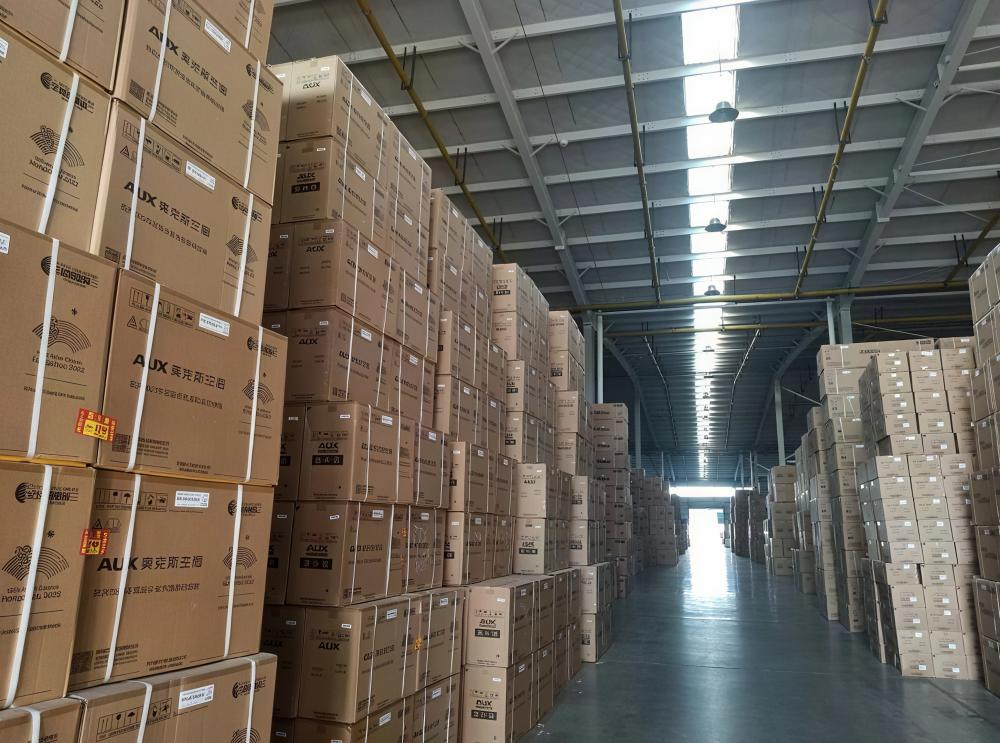
Where paper strapping tape fits: paper strapping tape is a paper-based option for cartons and daily-use goods where a fiber-based packaging story matters. It should be treated as an engineered material in its own right. Before switching, check tensile strength at the intended width, performance after humidity exposure, edge tear resistance, printability and compatibility with the tensioning or sealing method. Paper tape is not interchangeable with PP or PET on a high-speed automatic line without a line trial and current test data for the exact tape.
Eco-friendly options for cartons and daily-use packaging
Eco-friendly strapping is not a single material. For cartons, the practical options are clear or colored PP for line performance, PET where recyclability and strength are the main criteria, and paper strapping tape where a paper-based package is required. Jushuo states that PET strap is 100% recyclable and can be manufactured with recycled PET content. That makes PET a relevant option for a carton or bundle program that needs documented recyclability alongside strength.
For a daily-use packaging line, the more useful question is which option can be recycled in the actual waste stream and whether the strap specification still meets the load. A recyclable claim does not by itself prove line compatibility. A paper-based claim does not by itself prove sufficient strength. The buyer should ask for the material data, the trial result and the disposal route that applies in the destination market.
Step-by-step selection checklist
- Write the packaging job in one sentence. Example: 16×1.0mm transparent cut PET for an automatic textile bundling line, or 12mm machine-grade PP for a home-appliance carton line.
- Record the failure mode. Is the problem breakage, tension loss, carton crush, line jam, print legibility or receiving compliance?
- Fix the format. Choose roll or cut length, width, thickness, core size and roll length. Do not leave these to a generic material description.
- Match the material to the load. PP for light cartons and daily-use bundles; PET for textile cut lengths, compressed fiber bales and higher-strength printed cartons; paper strapping tape only after a separate trial.
- Demand specification-level evidence. Ask for break force, elongation, straightness or deflection, print adhesion and the exact model or case reference.
- Trial the actual line. Check feed, seal, cut, bundle tightness and print before changing the approved source.
- Set a replenishment plan. Separate stock items from custom cut lengths and confirm lead time, packing format and safety stock for each item.
Limitations and boundary conditions
The documented cases in this guide are application evidence, not a guarantee that the same specification will fit every line. A 16×0.8mm printed PET strap approved for one pharmaceutical carton program may not fit a different machine or artwork requirement. A green cut PET format approved for one chemical-fiber bale may need a different length for another press. A 12mm PP strap that runs on one carton line may need a different surface or stiffness on a faster line.
Paper strapping tape has an additional boundary: its performance depends on paper grade, coating, width and humidity exposure. Buyers should not assume that a paper strap sample tested in a dry room will perform the same way in a humid warehouse or a chilled distribution chain. The same caution applies to printed PET: the print must be checked after handling, not only on the approved sample.
Finally, product-family ranges are not a substitute for a quoted specification. Jushuo PET packaging strap covers 9mm to 25mm and 160kg to 1360kg across the range; PP machine grade covers 5mm to 19mm and 45kg to 230kg across the range. The buyer should approve the exact width, thickness and break force that will be delivered.
FAQ
Plastic strapping manufacturer for packaging lines Chinese
When evaluating a Chinese plastic strapping manufacturer for packaging lines, check the supplier against the line rather than against a general product list. Confirm the exact material family, width, thickness, cut length or roll length, core size, break force, elongation, surface finish and print capability. For automatic lines, ask for evidence of straightness or deflection, feed performance and joint strength at the quoted specification. For regulated packaging, ask for the print approval, batch traceability and current test reports for the exact item.
Jushuo Packaging is a Chinese manufacturer of PET strapping, PP strapping and Eco Friendly Strapping, founded in 2017, with 4 PET lines, 5 PP lines, 2 SSP units and an annual capacity above 20,000 tons. Its documented supply includes transparent cut PET for textile bundling, green cut PET for chemical-fiber bales and custom-printed PET for pharmaceutical packaging. A practical next step is to send the line details, load weight, current strap specification and a sample request through the official Jushuo Packaging website so the supplier can confirm the exact format before a line trial.
Next step: prepare a one-page specification with the packaging application, machine type, strap width and thickness, cut length or roll length, required break force, print content and target delivery volume. That package is more useful for a sample or quotation request than a generic inquiry.
Conclusion
Plastic strapping for light industry and daily-use packaging is an application decision. PP strap rolls fit cartons, home appliances, paper reams and logistics bundling where flexibility and machine feeding matter. PET strapping fits textile cut-length lines, compressed chemical-fiber bales and higher-strength printed pharmaceutical cartons. Paper strapping tape can be considered for carton programs that need a paper-based option, but only after its own strength, humidity and line-trial data are approved.
The safest buying path is to write the packaging job first, then lock the exact specification, verify the documented strength at that specification and run a line trial. That approach keeps the material choice tied to the real packaging line and avoids replacing one mismatch with another.
Have Questions or Need More Details?
Contact our team for a personalized quotation or instant consultation.
Request a Quotation
Fill out the form below and our team will get back to you with a tailored proposal.
WhatsApp Direct Chat
Prefer to chat in real-time? Message us on WhatsApp for instant assistance & quick answers.
- Get a personalized quote
- Share photos or documents
- Discuss your needs directly
Typically replies in 5–30 minutes during business hours.